Related: Blender Blade Durability: What 25 Blends Actually Does to a Smoothie
I have made smoothies twice a day for years, first as an ER nurse who wanted fiber without stripping it out of the fruit, then as the owner of a six-stool smoothie stand called Pulp Cove. That is the short version of how personal and countertop blenders stopped being appliances and became my job. I killed a cheap machine in a month. I wore out a Magic Bullet that sounded like a jet engine in my apartment. I lived with a mid-range Ninja that crushed ice beautifully until roughly blend 25, when my smoothies started coming out chewy, which is the day I started calling them grainies. Eventually I spent Vitamix money and started making flour with it.
Here is what the spec sheet will not tell you. Wattage describes how much power a motor draws, not whether frozen mango comes out velvety. A 72-ounce pitcher is a gift on Sunday batch prep and a curse for one person in a studio apartment. Every blade dulls. The only question worth asking is whether it happens after 25 blends or after five years, because that is the number that decides what you should pay.
So this is not a roundup of the loudest claims. It is four machines doing four different jobs, judged on what my stand taught me: does it crush frozen fruit and ice with no chunks on blend one, does it stay smooth past blend 25, how loud is it at full power, does a long run heat the drink up, does a full pitcher pop the lid, and can I take every part apart and wash it. Those six questions are the whole test.
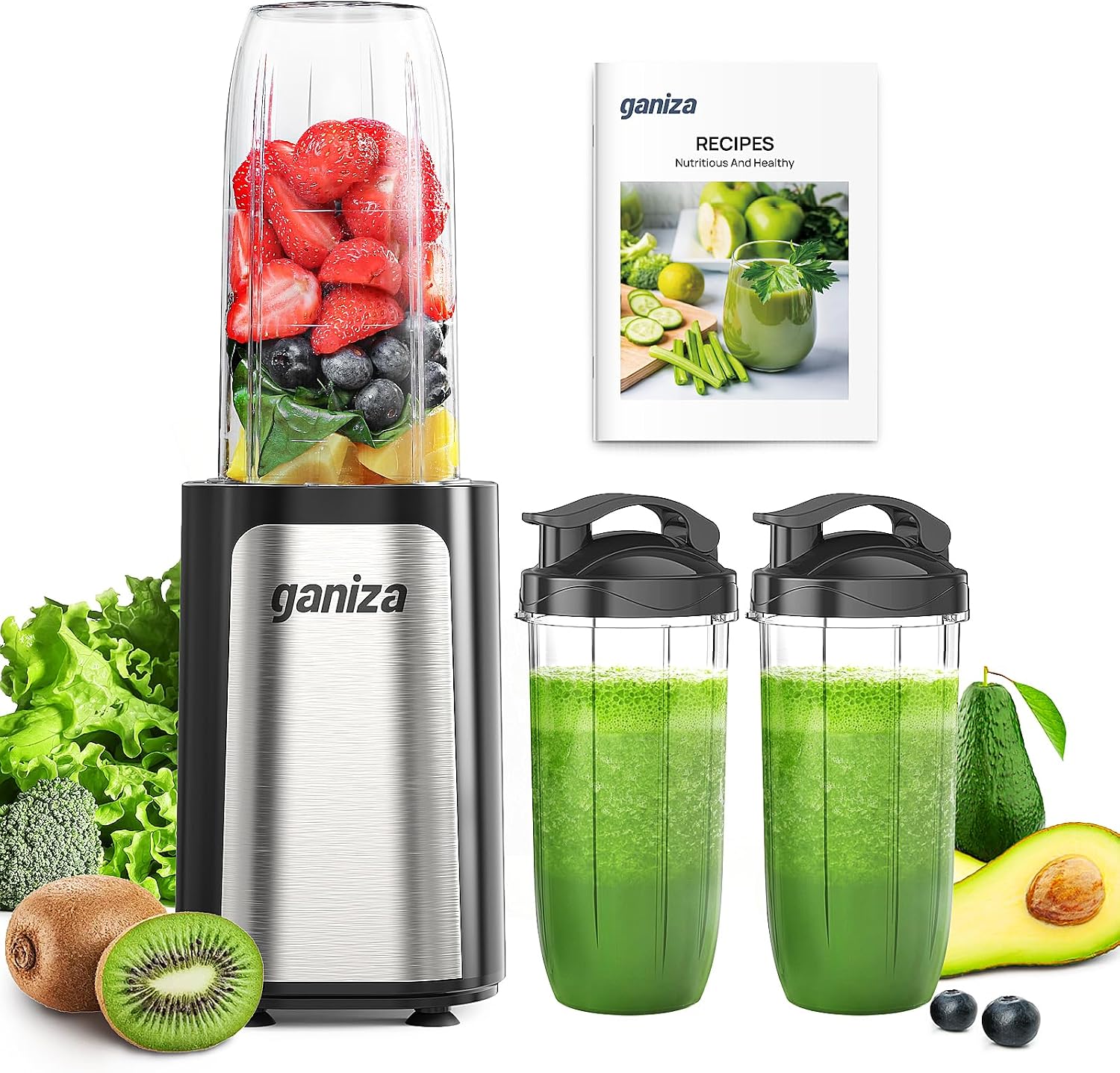
Best for a Tiny Kitchen: Ganiza Smoothie Blender
The name tells you the shape of this one. It is a 14-piece personal blender kit aimed at shakes and smoothies you drink straight from the cup, which is the right design for a small kitchen and the wrong design for a family of five. Nothing about it asks for countertop real estate. You blend, you twist the cup off, you drink, you rinse.
That is the appeal, and it is real. For a single person who wants one serving and no pitcher to scrub, a personal blender earns its rent in a way a full-size machine does not. I have watched people buy a 72-ounce pitcher, use it for one banana and some milk, and then resent it every single morning while it takes up half their counter.
The catch with any personal blender is the connection points between the base and the cup, and the noise. On the cheap ones, the plastic tabs wear, and a worn tab means a cup that wobbles instead of seating. You get a rattling blend and eventually a leak. The other thing is volume. A personal blender at full power is loud in a way that travels through apartment walls, and I say that as someone who has apologized to a neighbor about it. Before you commit to a portable personal blender, run it once at full speed and ask yourself whether you would want to hear that at 6 a.m. every day.
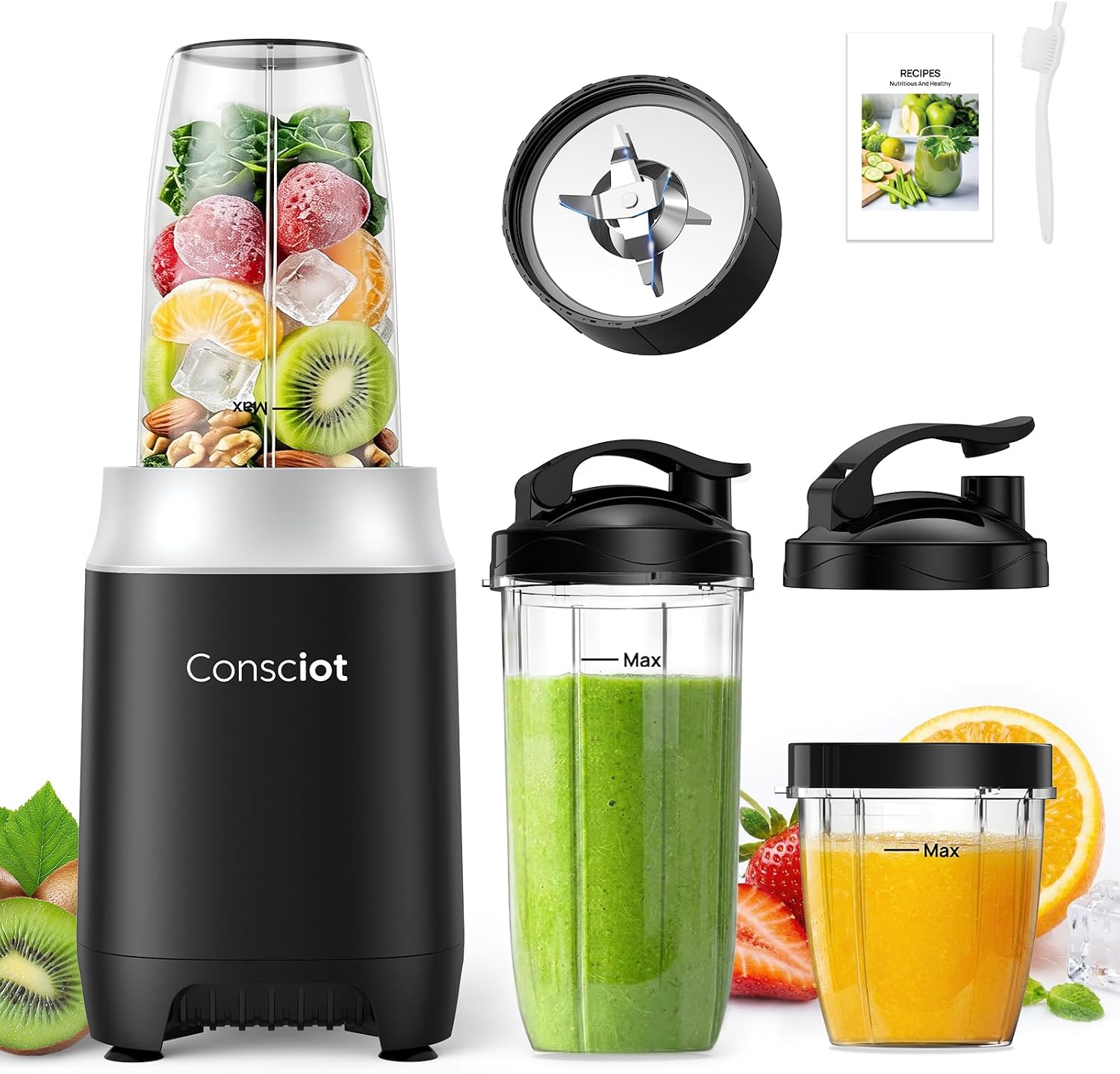
Best Budget Combo: Consciot CB10 Personal and Countertop Blender
The Consciot CB10 is the interesting middle child here. It is a combo: a personal cup side and a countertop side in the same machine, 900 peak watts, 11 pieces in the box. If you cannot decide between a to-go blender and a pitcher blender, this is the machine that says you do not have to.
Combos make sense for a specific person. That person makes a protein shake at 6 a.m. in a cup, and on Sunday wants to blitz a bigger batch for the week. Two jobs, one footprint. That is genuine value, and it is why I keep telling people that value is not the sticker price. Value is the price divided by how many velvety smoothies you get before the blades turn on you.
Where a combo asks for patience is in the switching. You are changing vessels, you are keeping track of more parts, and more parts means more things to lose or crack. Peak watts are also not the same as sustained watts, so treat the 900 number as a ceiling rather than a guarantee. Load it the way you would load any blender: liquid first, frozen fruit on top, and tamp down instead of overloading. Overloading is how lids pop and how you end up with smoothie on the ceiling, which I have done in front of paying customers.
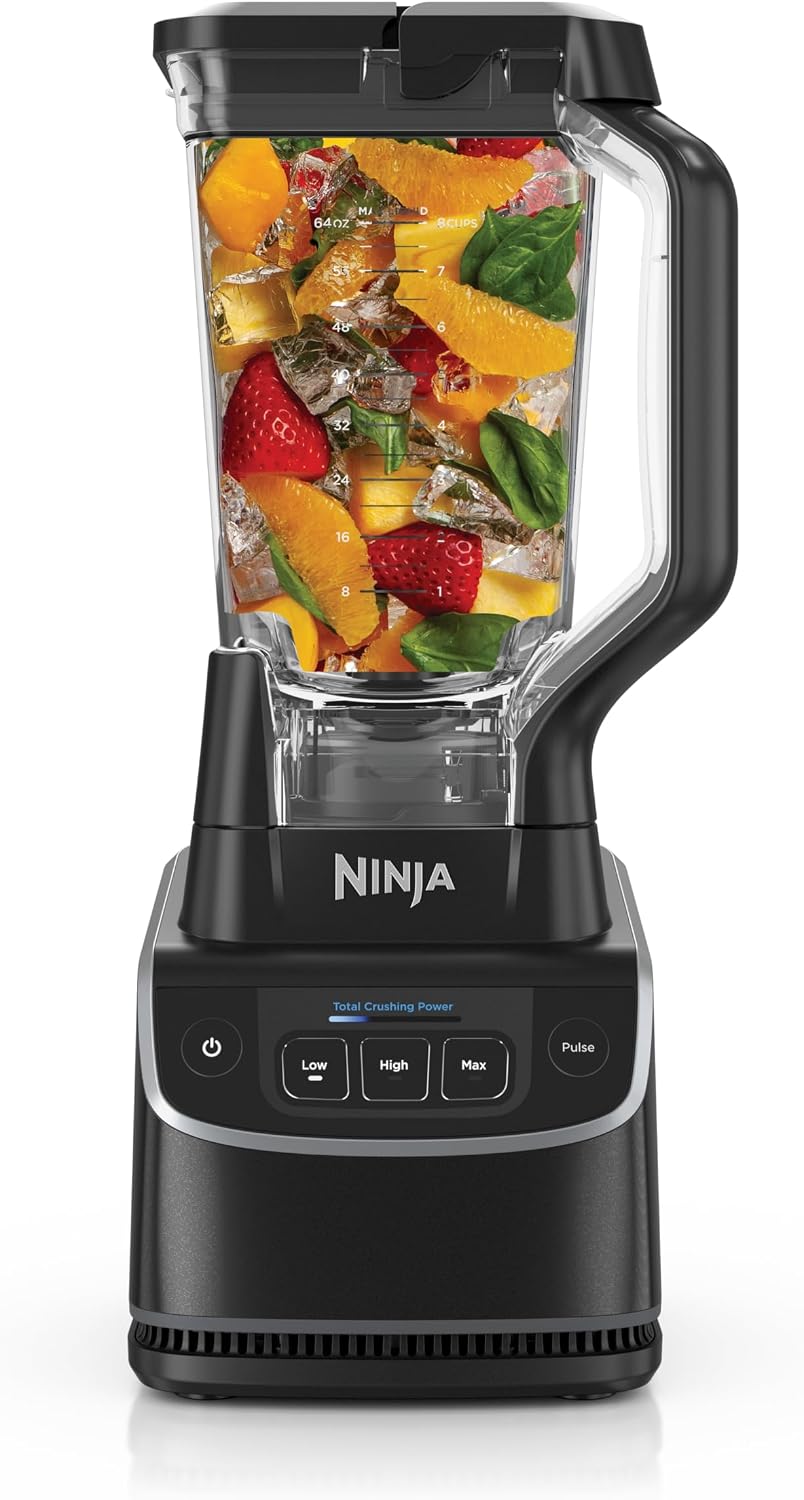
Best Large Pitcher Value: Ninja UltraCrush Professional Blender
The UltraCrush is the direct descendant of the Ninja I bought years ago after reading a mountain of comments and a Consumer Reports roundup that rated that older model second. It is 1000 watts, it has a 72-ounce pitcher, and it runs three speeds. That combination is the best large-blender value I know of, and it is the machine I would hand to someone who wants a full-size pitcher without paying premium money.
Large pitchers solve a problem personal blenders cannot. Batch prep. Frozen fruit, greens, ice, enough for four servings, one run, into jars for the week. My Sunday batch is still a 72-ounce job, even though I know better than anyone that portion control is the smarter play. I have frozen a pitcher of leftovers before. I will probably do it again.
The honest caveat is the same one that made me coin the word grainies. Ninja blades are sharp, and sharp blades dull. My old machine crushed ice like a dream at the start, and somewhere around blend 25 the texture began to slip: not chunky exactly, but chewy, like the fruit was being chopped instead of pulverized. That is the trade you make for the price. Buy the UltraCrush expecting excellent early results and plan on a replacement timeline if you blend twice a day like I do. If you blend once or twice a week, that timeline stretches out for years.
Best for Daily Frozen Fruit: nutribullet Power Core Blender
The nutribullet Power Core is the most power in this group: 1400 watts peak, a 72-ounce pitcher, and a design aimed squarely at smoothies, crushed ice, and frozen fruit. If your freezer is full of frozen mango and spinach cubes, this is the machine that stops the argument.
Power matters most on the hardest input, and that input is ice. Ice is what separates a blender that works from a blender that sounds like it is working. Peak wattage is the headline, but the thing I actually care about is whether a full pitcher of frozen fruit and ice comes out smooth without me stopping to tamp down every thirty seconds. When you have to tamp constantly, you are fighting the machine instead of using it.
The trade for that power is noise and heat. Big motors are loud, and a long run warms the drink. If you are blending a green smoothie for the fiber, you do not want it coming out tepid. Keep runs short, blend what you need, and do not park it on the counter running while you answer a text. The other thing to plan for with a full-size nutribullet is countertop real estate. It is a 72-ounce pitcher machine, so it wants a permanent home, not a spot in a cupboard you have to fight your way into every morning.
How I test every blender
No machine gets a recommendation from me without a first-blend frozen fruit and ice test. Frozen strawberries, a handful of ice, liquid at the bottom, full power, and then I taste for chunks. If blend one is gritty, nothing that comes after matters.
Then the durability run. Twenty-five blends is where grainies show up in my experience, so that is the mark I watch. I log every batch and taste after each one, because a blender that is velvety at blend 5 and chewy at blend 25 is not a blender, it is a rental.
Noise gets measured, not guessed. I run a decibel meter at full power because apartment friendly is printed on machines that sound like a jet engine, and I have lived that with my neighbors knocking. No pitcher claim survives without a full-batch run either. If the lid pops when the pitcher is full, the machine is out, no matter how good it looks on paper.
Analysis and what the numbers mean
Two of these machines are personal-first and two are pitcher-first, and that is the real fork in the road, not wattage. The Ganiza and the Consciot solve a single-serving problem, and the Ninja UltraCrush and the nutribullet Power Core solve a batch problem. Buying the wrong category is the most common mistake I see, and it has nothing to do with how much you spend.
Peak watts are a ceiling, not a promise. The Consciot at 900 peak watts and the Ninja at 1000 watts are in the same neighborhood for everyday blending. The nutribullet at 1400 watts peak sits above both, and that headroom is what you want if frozen fruit and ice are daily inputs rather than weekend treats. If your routine is a banana, milk, and a scoop of protein, you will never notice the difference.
Blade durability is the hidden cost in every budget machine, and it is why I tell people to think in smoothies rather than dollars. Sharp blades dull. Power and speed do not dull the same way, which is part of why premium machines keep their texture for years. Whatever you buy, expect the texture to be best at the start, and listen to your own mouth around blend 25. That chewy moment is your signal.
Personal and countertop blender comparison table
Here is the same table I keep taped inside the stand's prep cabinet. Power and capacity come from the spec sheets. The last column is the job each machine actually does in a real kitchen.
| Blender | Power | Capacity | Best for |
|---|---|---|---|
 Visit on Amazon → Ganiza Smoothie Blender, 14 pieces |
Personal blender | Single-serve cups | One person, tiny kitchen, drink from the cup |
 Visit on Amazon → Consciot CB10 combo, 11 pieces |
900 peak watts | Personal cup and countertop pitcher | One footprint for a shake plus a small batch |
 Visit on Amazon → Ninja UltraCrush Professional Blender |
1000 watts, 3 speeds | 72-ounce pitcher | Full-size value, family batches |
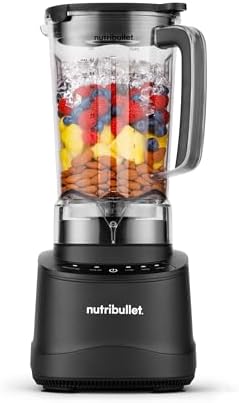 Visit on Amazon → nutribullet Power Core Blender |
1400 watts peak | 72-ounce pitcher | Daily frozen fruit and ice, twice-a-day blenders |
The pattern in that table is simple. Two machines trade power for space, and two trade space for power. Pick the column that matches your morning, not the row with the biggest number.
Should you buy the Ganiza Smoothie Blender?
Yes, if your counter is small and your servings are single. A 14-piece personal kit built around drinking from the cup is the correct answer for one person who wants a shake and a fast rinse instead of a pitcher to scrub. Just test the noise and the connection points before you hand it your 6 a.m. routine, because that is where cheap personal blenders give out first.
Should you buy the Consciot CB10 combo?
Yes, if you genuinely need both jobs and only one footprint. A 900 peak watt machine with a personal cup side and a countertop side, 11 pieces in the box, is a lot of flexibility for a budget machine. If you only ever make one kind of drink, skip the combo and buy the simpler machine. Combos reward people who switch, and they annoy people who do not.
Should you buy the Ninja UltraCrush Professional Blender?
Yes, if you want a full-size pitcher without premium pricing. 1000 watts, three speeds, 72 ounces. It is the value pick of this group, and I still reach for a Ninja on rushed mornings because a fast blend beats a slow program. Know the catch going in: blades dull, and around blend 25 you may meet my friend the grainy smoothie.
Should you buy the nutribullet Power Core Blender?
Yes, if frozen fruit and ice are non-negotiable and daily. 1400 watts of peak power and a 72-ounce pitcher is the most capable combination here, and it is the machine I would point at anyone blending twice a day. Give it permanent countertop real estate, keep your runs short so the drink stays cold, and it will earn the space.