I blend twice a day, every day, and I have for years. Before I opened a six-stool smoothie stand called Pulp Cove here in Portland, I was an ER nurse making a fruit smoothie at 5 a.m. and a veggie smoothie at 3 p.m., mostly to get fiber without stripping it out of my food. Then the stand turned blenders from appliances into my actual job. This Ninja blender comparison is the writeup I wanted back when I was standing in an aisle trying to figure out why one 72 oz pitcher costs $40 more than another one that looks identical.
The best blender for most people is still the Ninja Professional BL610, because 1000 watts and Total Crushing handle frozen fruit and ice without chunks, and it costs a fraction of what a premium machine runs. But "most people" is doing a lot of work in that sentence. If you blend single servings in a small apartment, a 72 oz pitcher is a curse, and the Nutri-Blender Pro is the smarter buy. If you want one machine that also chops and mixes, the Compact Kitchen System earns its counter space. And if $30 is your ceiling, the Ganiza is a real option with real caveats.
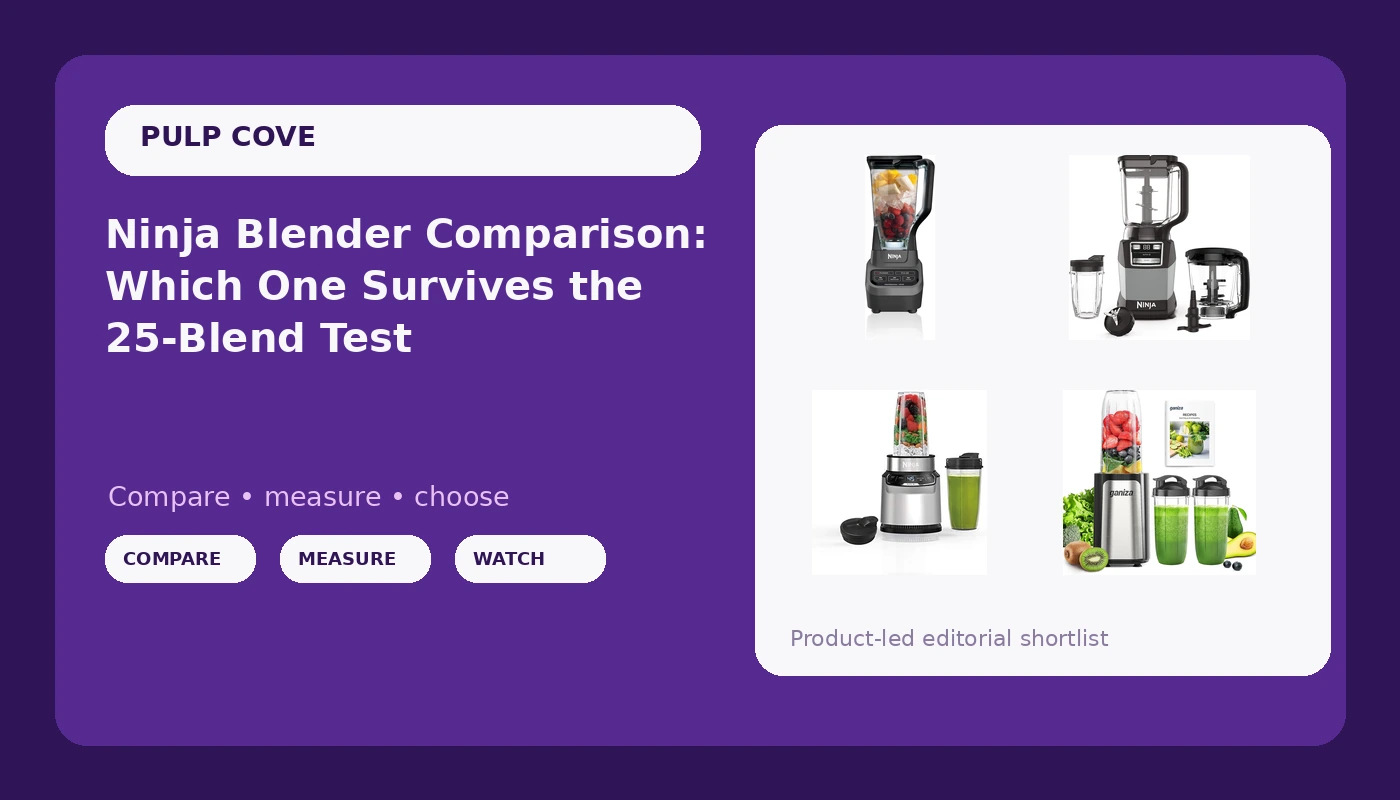
Ninja Professional Blender, 1000W, Total Crushing Tech, 72oz Pitcher, BL610
The value pick. 1000 watts, a 72 oz pitcher, and Total Crushing that pulverizes ice on day one
Around blend 25 the blades dull and smoothies start coming out chewy. I call those grainies
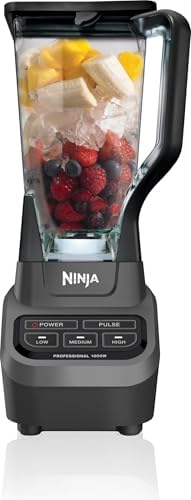
Ninja Compact Kitchen System, Auto-iQ, 1200W, 72oz Pitcher, Grey, AMZ493BRN
More power than the BL610 plus Auto-iQ presets, and it does more than smoothies
The extra cost only pays off if you actually use the other functions
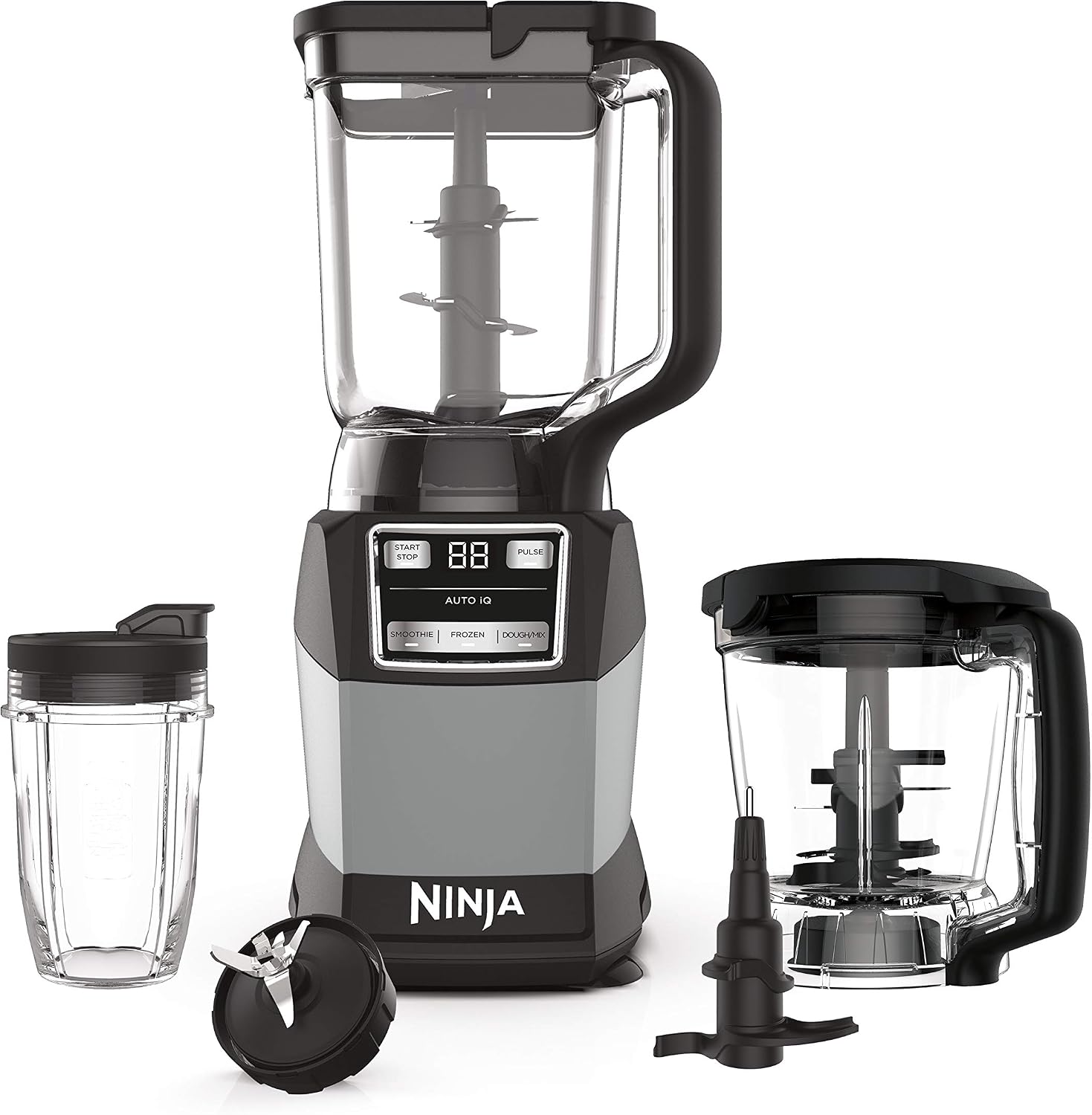
Ninja Nutri-Blender Pro with Auto iQ, 1100PW, (2) 24oz Cups, BN401
The right size for one person, two 24 oz cups, and 1100 watts in a small footprint
Personal blenders live and die on their connection points, and those wear out
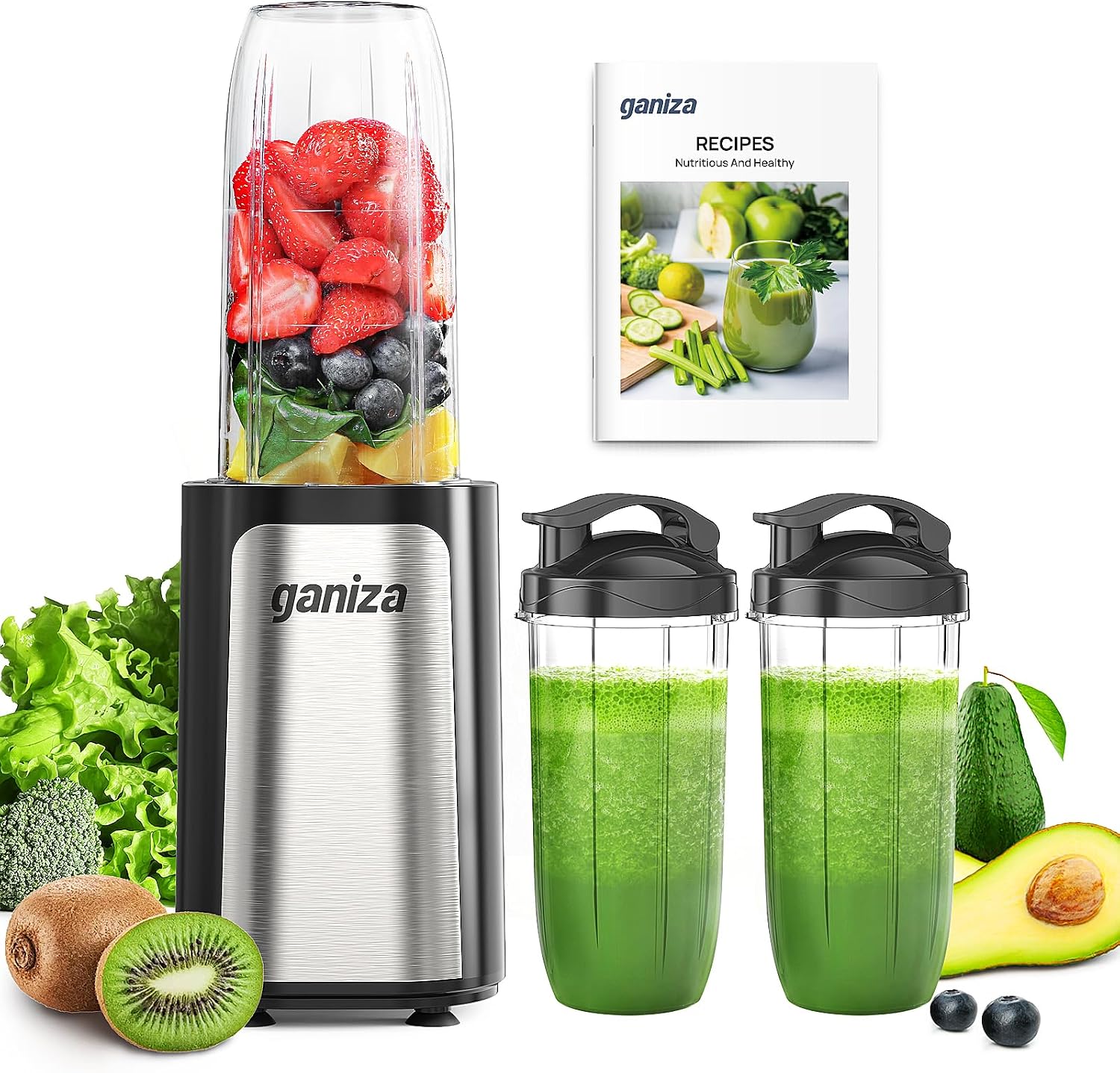
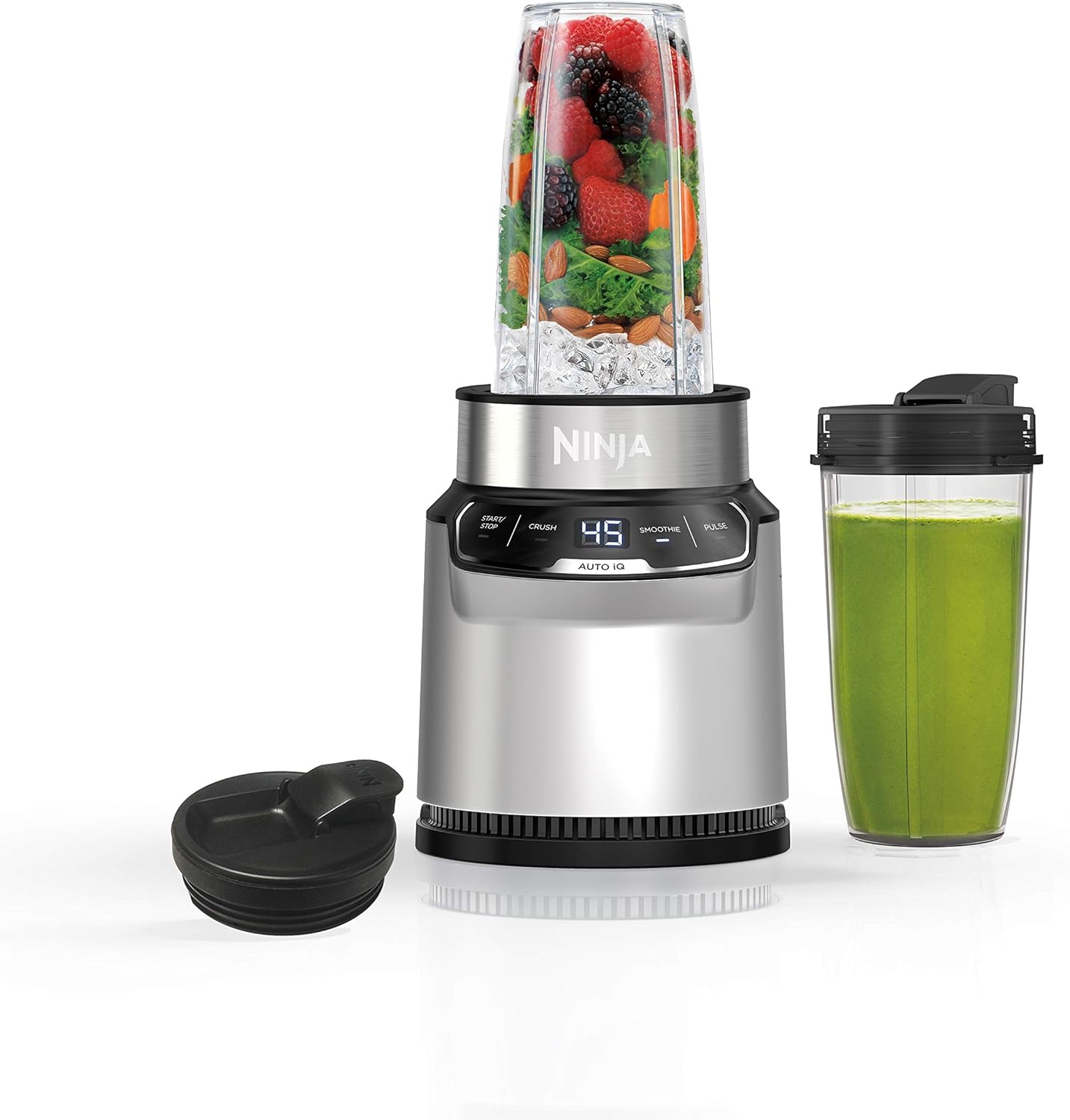
Ganiza Smoothie Blender, 14Pcs Portable Personal Blender Shakes & Smoothies
The cheapest way to find out whether you will actually blend every day
Budget plastic and budget motors, and the 14 pieces include parts you will never touch
Prices and availability were captured from Amazon Creators API and may change.
How I test a blender before it earns counter space
A blender's job is one thing: turn frozen fruit and ice into something velvety, with no chunks, every single time. Everything else is marketing. So every machine that comes through here gets the same run.
First, a first-blend frozen fruit and ice test, because chunks fail it immediately. Then a full-batch run in whatever pitcher it ships with, because that is where lids pop and smoothies end up on the counter instead of in the cup. Then the noise check at full power, because I have had a neighbor knock on my door and ask what the jet engine was. Then the part-by-part dishwasher check, including the base, because "dishwasher safe" on the box and "dishwasher safe" in my sink are two different claims.
And then the long one: the 25-blend log. Blades dull. Every blade dulls. The question is whether it happens after 25 blends or after five years, and that number is what decides the price you should pay. Right now I have two Ninjas on the bench running that log next to a Vitamix, a Magic Bullet, and a budget personal blender. I do not publish a blade durability claim until I have logged blend 26.
The two 72 oz pitchers: BL610 vs Compact Kitchen System
These two are the same idea at two price points, and the difference is not the pitcher. Both are 72 oz. Both say Ninja on the front. One is the plain, blunt, 1000 watt workhorse; the other is a 1200 watt system with Auto-iQ presets and a grey housing that looks like it belongs in a design magazine.
Total Crushing is Ninja's trademark for blades that pulverize ice. I bought the BL610 after reading a mountain of comments and a Consumer Reports roundup that rated it second, and for the first month it was everything I wanted. Frozen mango, whole ice cubes, no chunks. Then around blend 25 the smoothies started coming out chewy. That is the whole catch with the cheap large blender: the motor keeps going, the blades do not. If you are blending once a week, you will never hit the wall. If you are blending twice a day like me, you will, and you should know that going in.
The Compact Kitchen System answers that with 1200 watts and Auto-iQ, which is the part people underestimate. Presets mean you press one button and walk away instead of standing over the pitcher pulsing by hand. When I had a liquid-diet customer who needed a protein shake in 30 seconds flat, that kind of hands-off program was the difference between a drink and a delay. The trade-off is price and footprint. It is a system, not a blender, and if all you make is smoothies you are paying for functions that will sit idle.
The personal blenders: Nutri-Blender Pro vs Ganiza
For one person in a small kitchen, a 72 oz pitcher is not a feature, it is a problem. You either make more than you can drink or you make a sad little half batch that does not blend well because there is not enough volume to move. That is the case for the small machines.
The Nutri-Blender Pro is the serious version: 1100 watts, Auto-iQ, and two 24 oz cups so you can blend one and have the other clean and ready. That is a lot of power in a footprint that does not eat your counter. The catch with every personal blender is the same, and it is not the motor. It is the connection points between the base and the cup. On my old Magic Bullet those wore out and the cup started wobbling on the base, and once it wobbles you are blending with one hand holding the cup steady, which defeats the point. Test that connection before you trust it with your mornings. Twist it on, twist it off, twenty times, and see how it feels.
The Ganiza is the budget entry, a 14-piece portable set that costs about what a decent dinner out costs. I am running one on the bench precisely because that price bracket is where most people start, and most people get burned. The honest framing: it is the cheapest way to find out whether you will actually blend every day. If you will, you will outgrow it. If you will not, you just saved yourself $100. The pieces are also a tell. A 14-piece kit includes parts you will never touch, and countertop real estate is real estate, even when the parts are small.
Noise, and why "apartment friendly" is a marketing phrase
No noise claim counts without a reading at full power. That is my rule, and it comes from living through Magic Bullet season, when I covered my ears and a neighbor knocked on my door to ask what the jet engine was.
Here is the thing people get wrong: a personal blender is not automatically quieter than a full-size one because it is smaller. The Nutri-Blender Pro runs 1100 watts, which is more than the BL610's 1000, and small housings with thin plastic do not absorb anything. What actually helps is a base with some mass and a program that runs at a steady speed instead of surging. If you share a wall, test the noise before you buy, not after. I blend my own breakfast at 6 a.m. and apologize to the neighbors, so I am not going to pretend this is a solved problem.
The 25-blend question, and what it means for price
Value is not the sticker price. Value is the price divided by how many velvety smoothies you get before it turns to grainies. Run that math and the ranking changes depending on you.
If you blend once a week, the BL610 will outlive your interest in smoothies, and buying anything more expensive is throwing money at a problem you do not have. If you blend daily, you will hit the blade wall inside a couple of months, and the extra money for more power and presets starts looking less like luxury and more like maintenance. This is exactly why I eventually bought a Vitamix, at roughly five times the price of the Ninja. It does not rely on sharp blades to do the work, so there is nothing to dull. It also aerates more than you expect, so your protein shake comes out half air unless you plan for it, and it makes foam. No regrets, some foam.
Countertop real estate and the full-batch test
Before you buy any of these, run two checks in your own kitchen.
The first is the full-batch test. Fill the pitcher to the line the manual allows, add frozen fruit, and run it. If the lid pops, it is out. Overloading a 72 oz pitcher is the single most common way people end up with smoothie on the ceiling, and no spec sheet warns you about it. Tamp down with a tamper instead of piling in more fruit. That is the whole skill.
The second is the tape measure. A 72 oz pitcher machine needs vertical clearance under your cabinets and a base wide enough that it does not live permanently shoved in a corner. A personal blender with two 24 oz cups takes a fraction of that. In a small apartment, the machine that fits your counter is the machine you will actually use, and a blender in a cupboard is a blender you do not own.
The trade-offs, stated plainly
Buy the Ninja Professional Blender if you want a big pitcher, real ice crushing, and the lowest price per smoothie for the first few months of ownership. Accept that the blades dull and that you will eventually taste it.
Buy the Ninja Compact Kitchen System if you want one machine that blends, chops, and mixes, and you will actually use Auto-iQ instead of standing there pulsing. It is the most capable thing on this list.
Buy the Ninja Nutri-Blender Pro if you blend for one, you are short on counter space, and you want two cups so one is always ready.
Buy the Ganiza Smoothie Blender if you are not sure yet whether daily blending is a habit or a phase, and you want to find out for the least money.
What I am watching next is the rest of the 25-blend log on the two Ninjas, because that is the number that decides whether the cheap large blender is a bargain or a subscription. When I have blend 26 logged and tasted, you will hear about it.