Most people who try juicing and blending at home quit inside a month, and the machine usually takes the blame. In my experience the machine is maybe a third of the problem. The rest is produce prep and the fact that nobody warned you what to do with a pound of wet pulp.
I spent eight years as an ER nurse blending a fruit smoothie at 6 a.m. and a veggie smoothie in the afternoon, every day, because I wanted the fiber and not a clear glass of juice. Then I quit and opened a six-stool smoothie stand, where blenders stopped being appliances and became the job. I have made every mistake in this guide, in bulk, on a deadline, with a line at the counter.
So here is the whole workflow for juicing and blending at home: what to buy, how to prep, the order to run your machines, and the four places a normal kitchen turns a good smoothie into a chewy one.
Why you should trust me
I ran that stand for years and the testing log from it became this site. Every machine that came through got the same treatment: frozen fruit and ice on the first blend, a full batch loaded to the pitcher line, a decibel meter at full power, and a taste check after blend 25 to see whether it still came out velvety or had gone chewy. I call the chewy ones grainies, and I will not recommend a machine that makes them.
I am not a lab. I do not have an anechoic chamber, and I am not going to pretend a blender writeup needs one. What I have is a stand, a routine that runs twice a day, and a habit of logging what happens after the honeymoon phase, which is exactly where most buying advice stops. Blend one is easy. Blend 26 is the truth.
Two rules I do not bend. No machine gets written up without a first-blend frozen fruit and ice test, because a blender that leaves chunks on day one is not going to get better. And no blade durability claim gets made without a 25-blend log, because that is where the grainies show up.
How I picked and how I tested
This guide is built around two machines, and they do different jobs. One presses juice, one blends smoothies. Neither replaces the other, and if you buy the wrong one first you will spend a year annoyed at a machine that was never meant for the drink you actually want.
Both were judged on the same short list:
- Does it crush frozen fruit and ice with no chunks on the first blend?
- Does it still come out smooth at blend 25, or does it turn to grainies?
- How loud is it at full power, and would a neighbor through a shared wall complain?
- Does a full batch run pop the lid?
- Do all the parts come apart, and are they dishwasher safe, including the pieces you would rather not check?
That last one sounds fussy. It is not. The single most common reason a machine ends up in a cupboard is that cleaning it takes longer than drinking what came out of it.
What you need before you start
You need less than the internet tells you. A knife and a board, a freezer bag or two for portioning fruit, a wide-mouth container for pulp, a bottle brush for the juicer screen, and one machine for each job you actually do. If you juice greens daily, that means a cold press machine. If you drink smoothies daily, that means a blender with a pitcher sized to the number of people you are feeding.
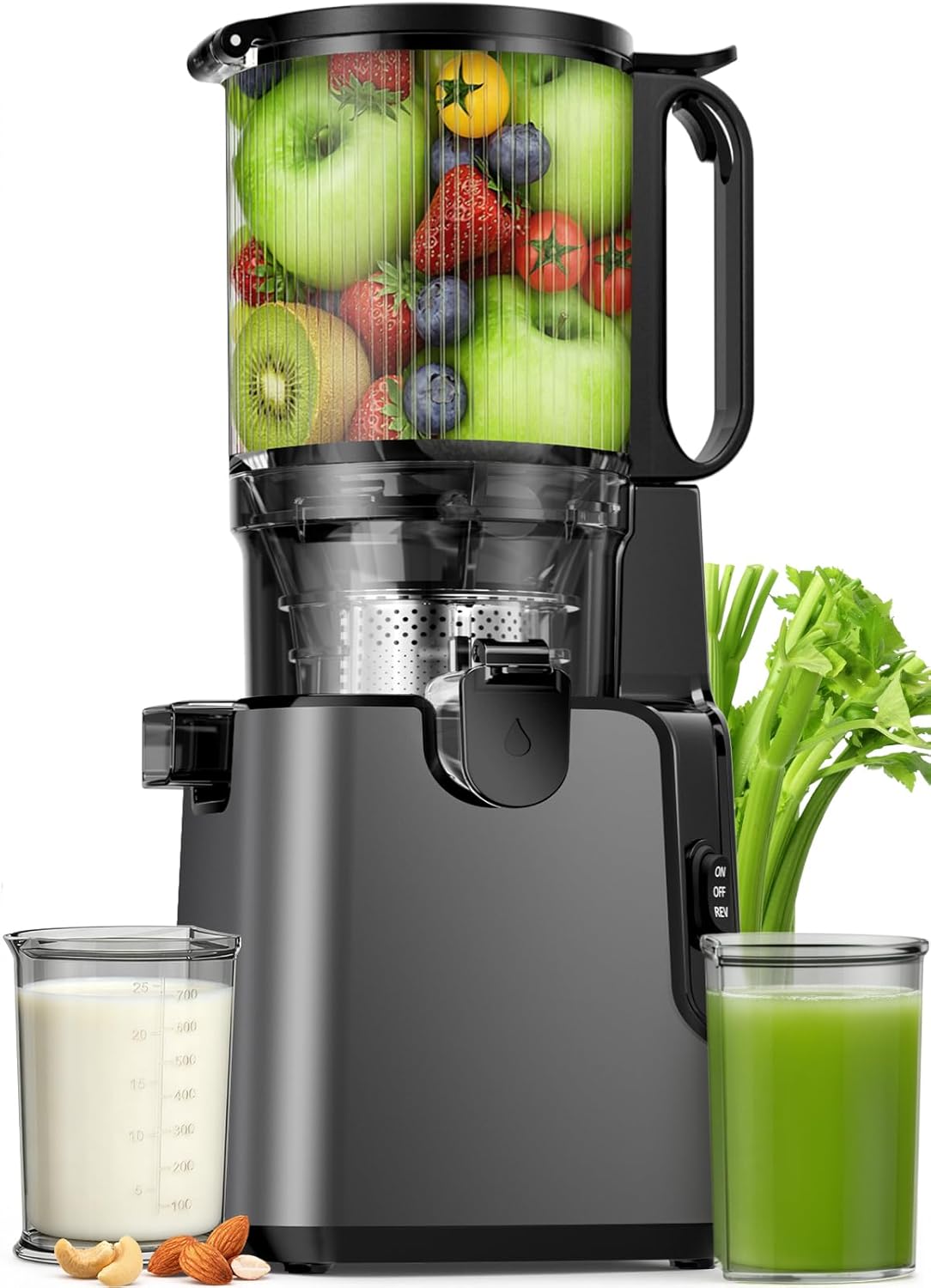
The cold press pick: YPONE Juicer Machines 2-in-1 Cold Press Juicer Easy to Clean Titanium gray
 Visit on Amazon →
Cold press is the slower, quieter side of juicing, and it is the side that squeezes noticeably more out of greens. If your juice is mostly kale, spinach, and celery, this is the category that wins. A fast centrifugal machine gets you a glass in a hurry and leaves a lot of the good stuff in the pulp bin. This one presses instead.
The name tells you most of what you need to know up front: it is a two-in-one cold press machine with a manufacturer claim of easy cleaning, finished in a titanium gray color. Two-in-one machines usually mean a juicing side and a second function, so read the listing carefully to confirm exactly what ships in the box before you order. Check current Amazon price.
Flaws but not dealbreakers: Cold press is slow by design. You feed in small batches, you cut produce to fit the chute, and you will not be rushing out the door with a glass in 90 seconds. The cleaning claim matters most here, because the screen is the part that decides whether you keep using the machine. Rinse it the moment you finish, before anything dries on it, and a cold press stays a five-minute job instead of a twenty-minute one.
Anyone who juices greens most mornings and wants more liquid out of the same bag of spinach should start here.
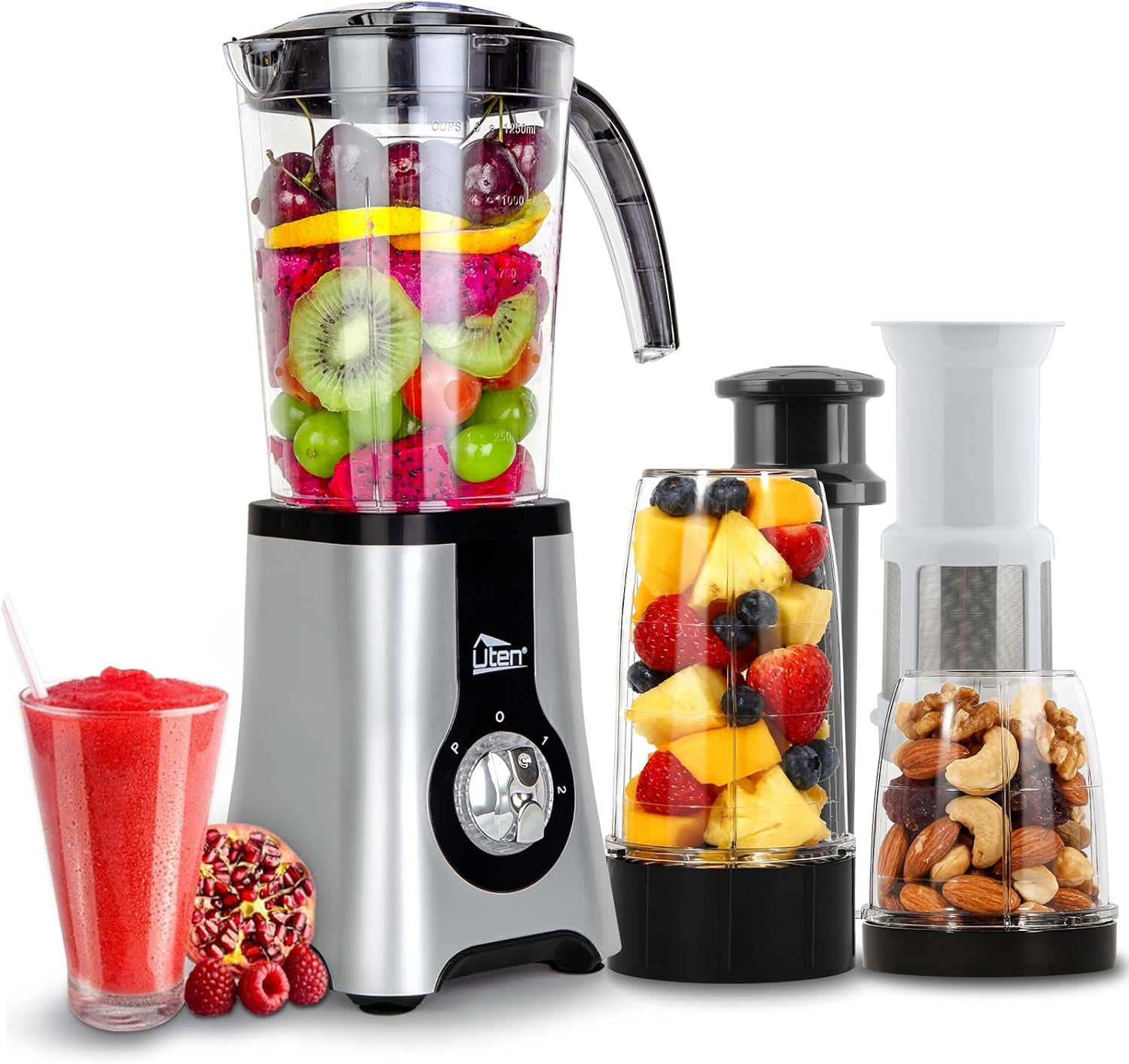
The everyday pick: Smoothie Blender Grinder 5-in-1, Multi-Functional Mixer 42 oz, Juicer
 Visit on Amazon →
Forty-two ounces is the honest size for one or two people, and I will defend that all day. A 72 ounce pitcher is a curse for a single person: you either make too much, or you make a small batch in a big jar and watch the blades miss half of it. This is a five-in-one multi-functional mixer, and the name points at a smoothie blender, a grinder, and a juicing attachment in one footprint, which is the whole argument for a machine like this in a small kitchen. Confirm on the listing which jars and attachments are actually included. Check current Amazon price.
For smoothies, the grinder side of the name is the interesting part. Dry work like spices and coffee is a different blade geometry than frozen fruit, so treat it as a bonus, not the reason you buy. The reason you buy is that 42 ounces is enough for two breakfast smoothies and small enough to store.
Flaws but not dealbreakers: Do not fill past the max line and do not blend a full load of frozen fruit with no liquid. That is how lids pop and how smoothie ends up on the ceiling. Personal-style machines also live and die by their connection points, so seat the cup fully every time and check for wobble before you press go. If the cup starts rocking on the base, stop and reseat it.
Anyone in an apartment or a small kitchen who wants one machine for smoothies, a little dry grinding, and the occasional glass of juice should look here first.
The actual workflow
This is the part that matters more than which machine you bought. The order of operations is the difference between a routine you keep and a routine you abandon in three weeks.
Step one: Buy for your routine, not for the biggest pitcher. Count how many glasses you actually make on a weekday morning. If the answer is one, a 42 ounce pitcher is generous and a 72 ounce pitcher is a storage problem. Countertop real estate is real estate.
Step two: Prep and freeze produce in portions. Wash, chop, and bag your fruit the day you bring it home. Freeze bananas in coins, berries whole, and greens dry after a spin in a salad spinner. Wet greens freeze into a solid brick that no blade enjoys.
Step three: Juice first, blend second. If you are making both, run the juicer before the blender. Juice does not hold, so it goes in the glass and gets drunk while the smoothie comes together. If you blend first, the juice sits and separates while you scrub a pitcher.
Step four: Feed the juicer slowly and alternate textures. Hard produce, then soft, then hard again. That sequence keeps the screen from clogging with fiber and keeps the machine from bogging down on a fistful of ginger. Do not jam a full chute and walk away. Feed it like you mean it.
Step five: Deal with the pulp the same day. This is the step everyone skips and then resents. Pulp goes in a freezer bag for baking, into the compost, or into a soup base if you are the type. Whatever you choose, do it before you sit down, because pulp that sits overnight becomes a science project.
Step six: Load the blender in the right order. Liquid first, always. Then soft ingredients, then frozen fruit and ice on top. Blades need something to move, and a dry pitcher of frozen mango just spins a pocket of air around the blade.
Step seven: Tamp down instead of overloading. If the blend stalls, stop the machine, take the tamper or a spatula, and push the ingredients toward the blades. Never fill past the max line to solve a stall. That is how the lid pops.
Step eight: Blend in short bursts and stop at velvety. Thirty to sixty seconds is usually the whole job. Keep running and you are not making it smoother, you are warming it up and whipping air into it. If the pitcher feels warm to the touch, you went too far. Aeration is why protein shakes come out half foam.
Step nine: Clean before you sit down. Rinse everything while the glass is still in your hand. The five minutes you save by leaving it in the sink is the reason the machine ends up in a cupboard by spring.
Where this goes wrong
Four failure points account for almost every abandoned machine I have seen.
Overloading the pitcher. A full jar with no headroom has nowhere for the pressure to go, so it goes up and out. Fill to the line, not to the brim, and blend in two rounds if you need volume.
Expecting blend-one performance forever. Blades dull. Every blade dulls. The question is whether it happens after 25 blends or after five years, and that number is what you are actually paying for. If your smoothies go chewy in month two, that is a dull blade, not a bad recipe.
Trusting "apartment friendly" on the box. Noise is a feature you pay for, and the label will not tell you the truth. Run the machine at full power in the store if you can, or buy from a seller with a return window you can live with, and test it before the window closes.
No pulp plan. Juicing produces a shocking volume of pulp. If you do not decide what happens to it before you start, it becomes the reason you stop juicing.
One more: dishwasher claims deserve a check. I take every part out, including the base, and read the manual before I trust a single cycle. Some pieces are top-rack only, and some are hand wash no matter what the marketing says.
What I stopped keeping on the counter
Three categories lost their spot on my counter, and it is worth knowing why.
Fast centrifugal juicers are quick and cheap and genuinely fine for oranges and watermelon. They are not where you go for greens, because the yield is lower and the pulp comes out wetter. If your juice is citrus, a simple reamer beats a big electric machine and takes up a drawer instead of a shelf.
Personal blenders are the classic starter machine. They are compact, they clean easily, and they are worth it for on-the-go shakes. But the connection points between base and cup wear out over time, and the noise is a genuine problem through apartment walls. Test both before you trust one with your mornings.
Oversized pitchers are the last one. A huge jar sounds like value until you are blending a single serving in it, or worse, blending a full batch and cleaning the whole thing for one glass of breakfast.
What this all costs
The sticker price is the least useful number in this decision. What you want is cost per glass, and it has three parts: the machine, the produce, and the waste.
Start with the machine. Check current Amazon price on whichever one you are considering, then divide by how many glasses you expect to make before it turns to grainies. That second number is the one people guess wrong. A cheap machine that goes chewy at blend 25 costs more per good smoothie than a better one that holds up, and the math flips fast.
Then the produce. Greens are the expensive input, which is why cold press matters if greens are your base: more liquid out of the same bunch is a straight discount on every glass.
Then the waste. Freeze your fruit before it turns, portion it, and use the pulp. A juicer that makes great juice but sends half your produce to the bin is not saving you anything.
Do that arithmetic once, honestly, with your own numbers, and the choice between these two machines stops being about the box and starts being about your Tuesday morning.
That is the job. Buy for the routine you actually have, prep like you mean it, run the machines in the right order, and clean up before you sit down. Do that and the machine stays on the counter where it belongs.