I blend twice a day, every day. Frozen fruit and spinach at 6 a.m., vegetables and ginger at 4 p.m., because fiber matters more to me than a juice that throws it away. I did that for eight years as an ER nurse, then I quit and opened a six-stool smoothie stand called Pulp Cove. That is where blenders stopped being appliances and became equipment.
Everything on this site comes out of the stand's testing log. The rules are simple. No machine gets recommended without a frozen fruit and ice test on the first blend. No noise claim without a decibel meter running at full power. No durability claim without 25 blends logged, because blend 25 is roughly where blades start to go and smoothies turn into what I call grainies: chewy, not-smooth-enough, sad.
So this comparison is an odd one, and I want to be upfront about that. Two of these are complete blenders. One is a blender jar with no motor attached. One is a small replacement part that exists because blenders fail in exactly one spot. That makes this a guide to blender jars and replacement parts as much as a guide to blenders, and honestly that is the useful version. After a few thousand smoothies, I can tell you the jar and the drive coupler decide how long a machine lasts. The motor gets the credit. The plastic parts do the work.
The best buy for most kitchens is a complete blender whose jar and wear parts you can replace, not a premium container bolted to a base you do not own yet. But which complete blender, and when does a container or a coupler make more sense than a whole new machine? That depends entirely on what you already have on the counter.
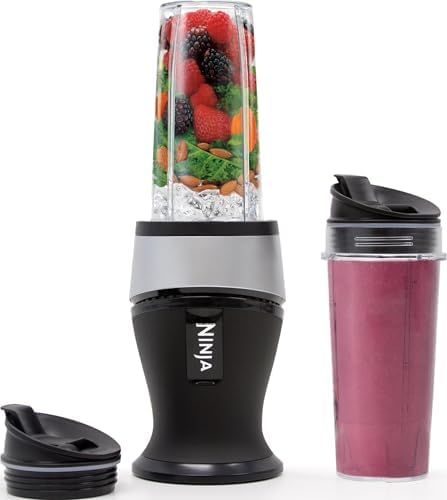
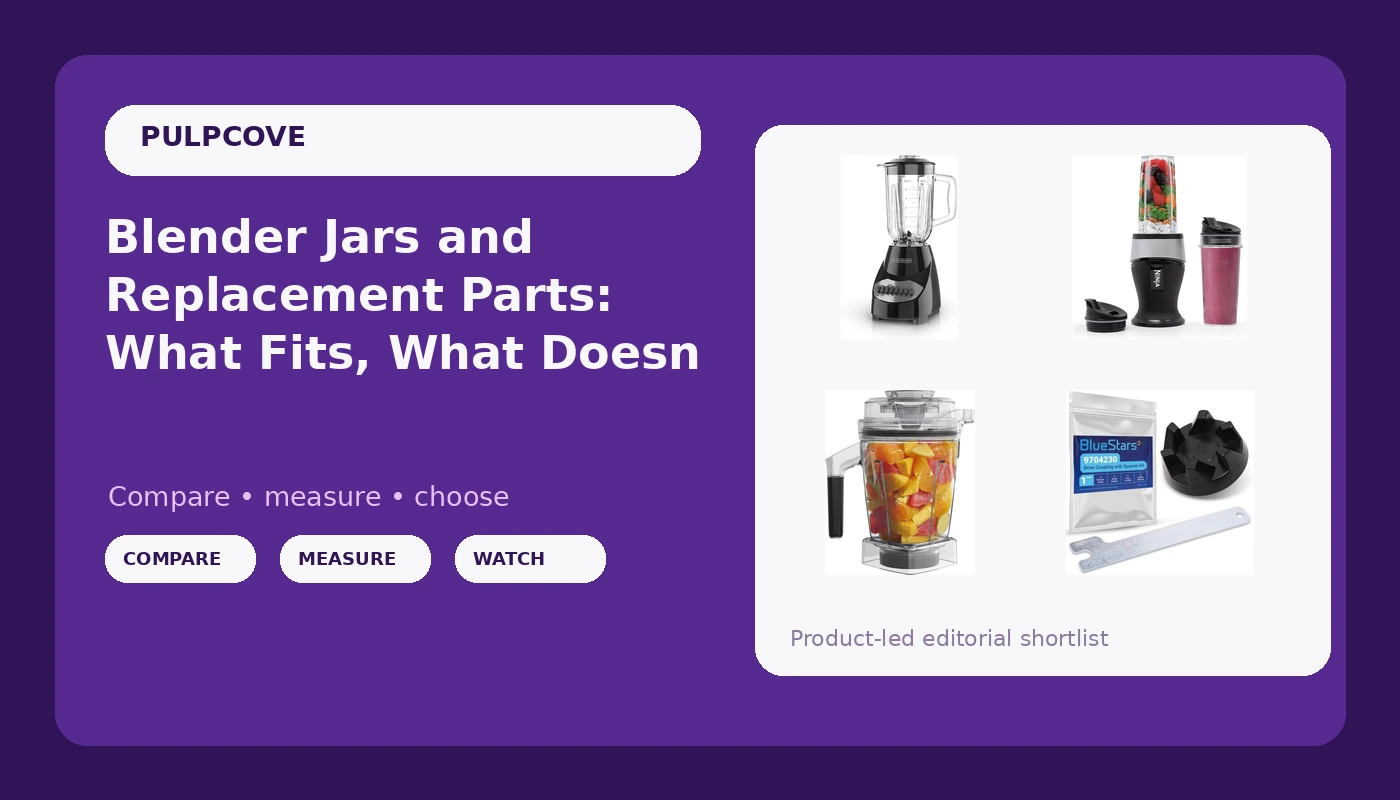
Ninja Fit Compact Personal Blender, 700W, (2) 16oz Cups, QB3001SS
A 700W personal blender with two 16 oz cups, so a single serving is the default instead of a compromise. Tiny footprint, and the cup is the jar, which means almost nothing to wash
Personal blenders live and die on their connection points. The collar where cup meets base is the first thing to wear, and when it wears the cup wobbles
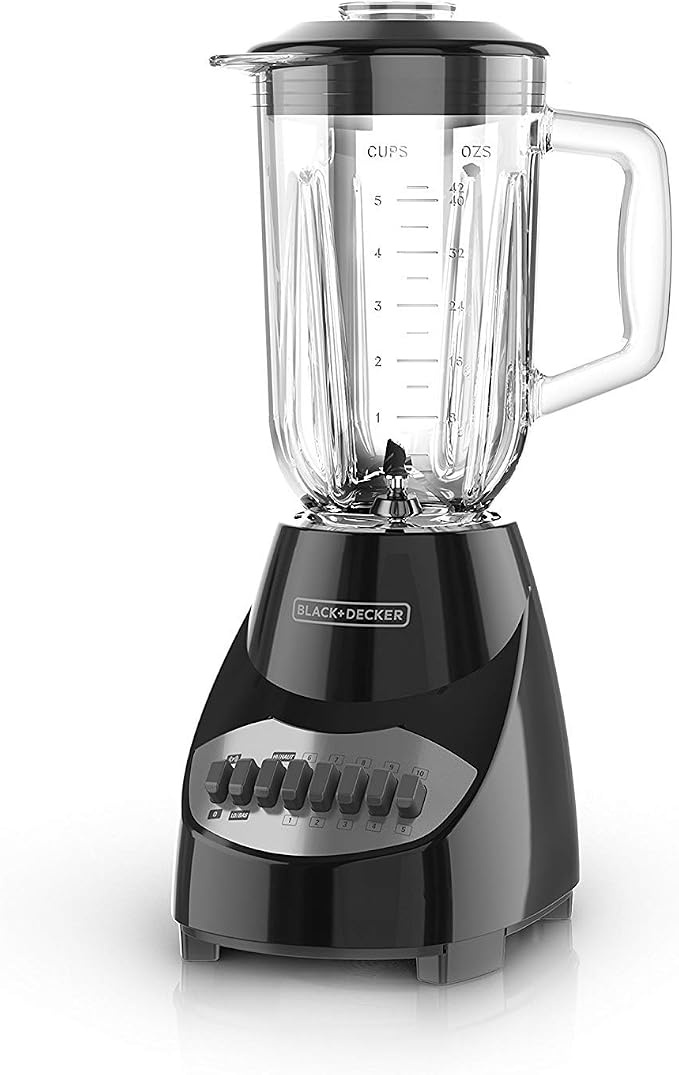
BLACK+DECKER Countertop Blender with 6-Cup Glass Jar, 10-Speed Settings, Black, BL2010BG
A glass jar instead of plastic, plus 10 actual speed settings. Glass does not hold onto the smell of last week's garlic and it does not scratch cloudy the way plastic does
6 cups is small for batch work, and glass is heavy. If you blend for two or more people, you will run it twice and wish you had not
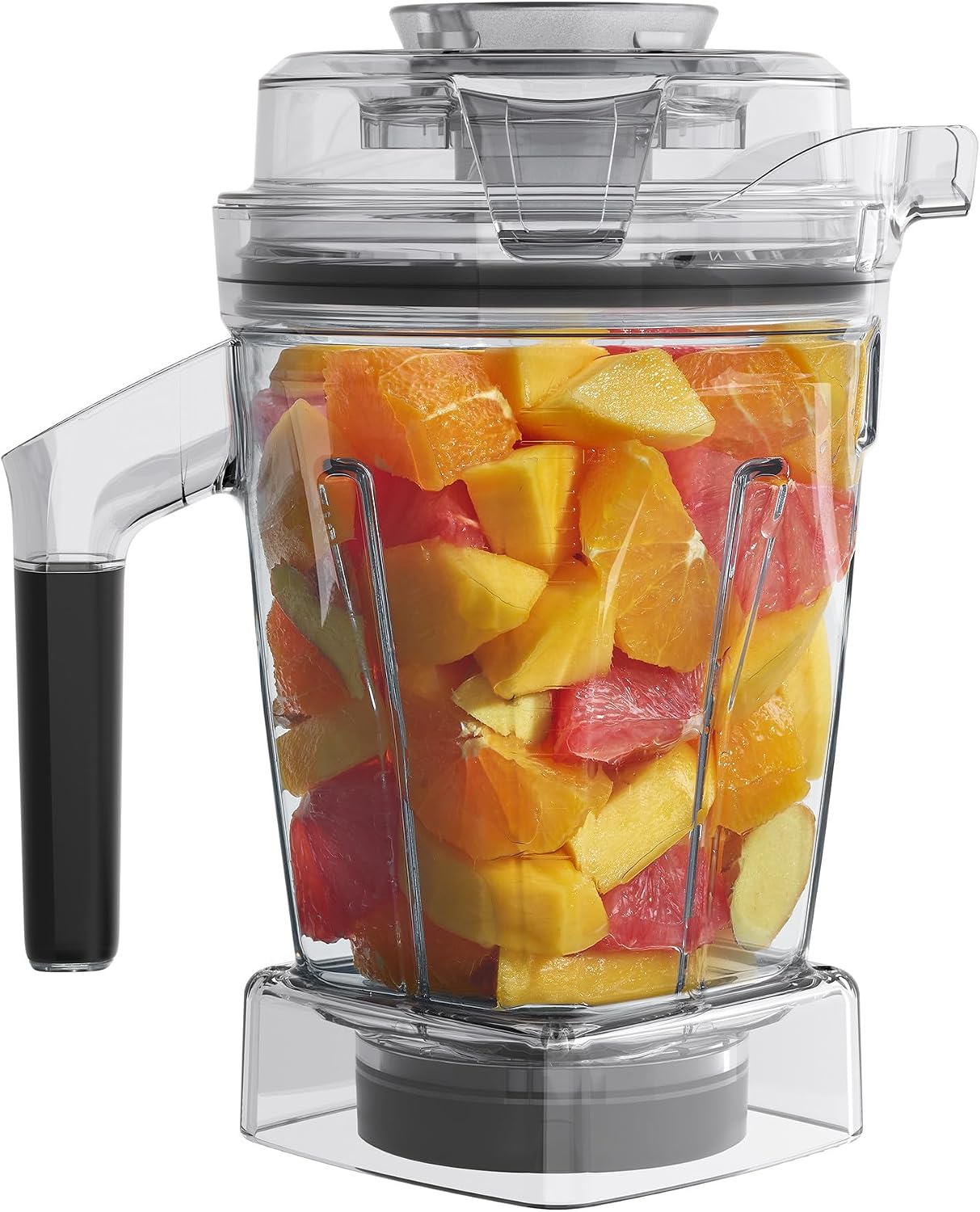
Vitamix 48 oz. Blender Container with SELF-DETECT, BPA-Free Tritan
The container is the part that actually wears on a premium machine, so replacing it resets the blender instead of replacing it. 48 oz is the right size for one or two people, and BPA-free Tritan resists staining
It is a container, not a blender. No motor, no base, nothing spins on its own. If you do not already own a SELF-DETECT-compatible Vitamix base, this is half a purchase
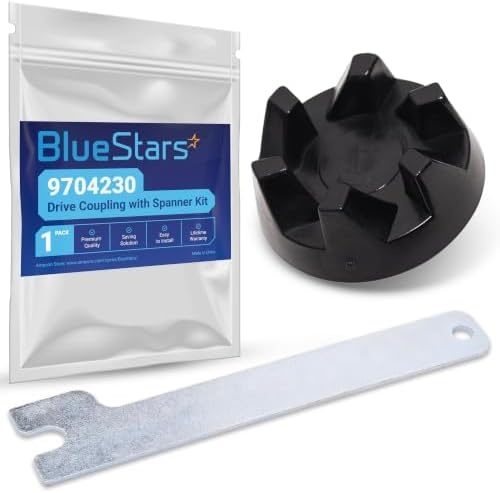
Ultra Durable 9704230 Blender Drive Coupler with Spanner Kit Replacement Parts by BlueStars
The cheapest fix on this list. The drive coupler is the sacrificial part, so it fails before anything expensive does, and the spanner kit is included instead of being a second order
It fits specific KitchenAid models (KSB5WH, KSB5, KSB3) and replaces WP9704230VP and WP9704230. It fixes one failure mode and nothing else
Prices and availability were captured from Amazon Creators API and may change.
What is actually on this list
Two complete blenders, one replacement container, and one replacement part. That mix is deliberate, because those are the four purchases people actually make when a blender enters their life.
The first purchase is the whole machine: a personal blender if you drink alone, a countertop blender if you batch. The second purchase, usually two to five years later, is the fix. On a cheap blender the fix is a new blender. On an expensive one the fix is a new container or a coupler, and knowing which parts are replaceable before you buy is the difference between a tool and a disposable.
I have made every version of this mistake. I started with a cheap model that died inside a month. I moved to a personal blender that sounded like a jet engine in my apartment, and my neighbor knocked on the door to ask what the noise was. Then I bought a mid-range Ninja after reading a pile of reviews and a Consumer Reports roundup that rated it second, and it crushed ice beautifully until roughly blend 25, when the smoothies started coming out chewy. That is the origin of the word grainies, and it is why I log blends instead of trusting a first impression.
Ninja Fit Compact Personal Blender, 700W, (2) 16oz Cups, QB3001SS
A personal blender's whole argument is that you drink from the cup you blended in, so there is no pitcher to scrape and no lid to wrestle. The Ninja Fit does that with 700 watts and two 16 oz cups, which means one is clean while the other is in the dishwasher. If your routine is one smoothie a day and you have 12 inches of free counter, this is the shape of machine that fits your life. A 72 oz pitcher is a curse for a single person, and I say that as someone who owns one.
The thing I would test on day one is the connection between cup and base. Personal blenders fail at the collar, not the motor. Set the cup in, press down, and pay attention to whether it seats with a solid click or a vague wobble. Then listen. "Apartment friendly" is printed on machines that sound like a jet engine, and the only honest way to know is to run it at full power with frozen fruit in it and decide whether you would do that at 6 a.m. with a neighbor on the other side of the wall. Ninja Fit Compact Personal Blender: Visit on Amazon →
BLACK+DECKER Countertop Blender with 6-Cup Glass Jar, 10-Speed Settings, Black, BL2010BG
Glass is the reason to look at this one. Plastic jars scratch, and scratched plastic holds onto flavors and goes cloudy in a way you cannot fix. Glass does not do that, and it does not stain orange the first time you blend a mango. The 10-speed dial also gives you somewhere to go between pulverize and stop, which matters more than people admit, because most cheap blenders have exactly two settings: loud and off.
The trade-off is size and weight. A 6-cup jar is a two-person jar at best, and glass is heavy enough that you notice it every time you lift it to the sink. This is the blender I would hand someone who makes one or two smoothies a day, wants a real jar instead of a cup, and does not want to think about wattage. It is also the blender whose jar is the part most likely to need replacing eventually, which is worth knowing before you buy it. BLACK+DECKER Countertop Blender: Visit on Amazon →
Vitamix 48 oz. Blender Container with SELF-DETECT, BPA-Free Tritan
I bought a Vitamix after the Ninja, at about five times the price, and I do not regret it. The reason is not blade sharpness. It is that a Vitamix does not rely on sharp blades, so there is nothing to dull, and blend 25 tastes like blend one. That design is also why the container is a sensible purchase on its own. On a machine like this, the jar is the wear item, and swapping it is cheaper and less wasteful than replacing the whole base.
Two honest caveats. First, this is a container. It has no motor, and it only makes sense if you already run a SELF-DETECT-compatible Vitamix base. Second, a premium container costs close to what some complete blenders cost, and if you are starting from nothing, buying the container first gets you a very nice jar that does not blend. The 48 oz size is the one I would pick for a household of one or two: big enough for a full batch, small enough that a single smoothie is not swimming at the bottom. Vitamix 48 oz. Container: Visit on Amazon →
Ultra Durable 9704230 Blender Drive Coupler with Spanner Kit by BlueStars
This is the least glamorous product in the comparison and the one that has saved the most machines. The drive coupler is the plastic part that connects the motor shaft to the blade assembly, which makes it the sacrificial part by design: when something has to strip, this strips, and the motor survives. If your KitchenAid blender spins but the blades do not, or the jar has started to smell like hot plastic during a blend, this is usually the part that failed.
The BlueStars kit fits KitchenAid KSB5WH, KSB5, and KSB3 blenders and replaces WP9704230VP and WP9704230, and it ships with a spanner kit so you are not hunting for the right tool mid-repair. The honest limitation is that it fixes exactly one failure mode. If your blender is dead because the motor burned out, or because the base cracked, no coupler will help. But if the blades have stopped turning while the motor still runs, you are looking at the cheapest repair on this page. BlueStars drive coupler: Visit on Amazon →
What fails first, in order
The blades dull. Every blade dulls. The question is whether it happens after 25 blends or after five years, and that number is what actually separates a budget blender from a premium one. Dull blades do not stop turning. They just stop cutting, which is why the failure shows up as texture instead of as a bang.
The coupler strips, usually from overloading a jar or from running the machine with a cup that is not seated all the way down. That is a wear part on purpose, and it is the reason a $30 part can rescue a machine you were ready to replace.
The container degrades. Plastic scratches, stains, and eventually cracks at the collar. Glass chips. Tritan resists all three better than either, which is the whole argument for paying for a good jar once.
The connection points wear. This is the quiet one, and it is why I test the cup-to-base fit before I test anything else. A cup that wobbles is a cup that will eventually leak, and a leak on a motor base is how a small problem becomes a new blender.
How I test, so you can repeat it
My log has three entries per machine. First blend: frozen fruit and ice, no chunks allowed, and if it comes out grainy on day one it fails immediately. Blend 25: same recipe, same ratio, and I taste for grainies. Full batch: fill the jar to the line it claims, run it, and see whether the lid stays on. I have mopped smoothie off a ceiling because I overloaded a pitcher, and I am not doing it again.
Noise goes on a decibel meter at full power, not on a marketing claim. Aeration gets checked too, because a protein shake that comes out half air is a bad shake regardless of how smooth the fruit was. And I check whether every part is dishwasher safe by looking at the parts, not the box, including whether the base can be disassembled at all. Some juicers and blenders ship with no disassembly instructions whatsoever, and I have figured those out by hand more than once.
The trade-offs, stated plainly
Buying the personal blender gets you speed and almost no cleanup, and costs you batch capacity and, usually, more noise per ounce of smoothie. Buying the countertop blender with the glass jar gets you a real jar and real speed control, and costs you counter space and a jar that is heavy to wash. Buying the premium container gets you a jar that will not stain and a machine that does not depend on sharpness, and costs you the most money for the least immediate function if you do not own the base. Buying the coupler gets you a working blender for the price of a takeout lunch, and does nothing at all if the motor is what died.
Which one to buy
If you make one smoothie a day in a small kitchen, the personal blender is the honest answer, and I would test the noise before I committed to it. If you make two or more servings at a time and want a jar that survives years of mango, the glass-jar countertop model is the value pick, as long as you accept running it twice for a crowd. If you already own a SELF-DETECT-compatible Vitamix base and your container is scratched or cracked, replacing the container is the move, and it is far cheaper than a new base. If your blender hums while the blades sit still, buy the coupler first and see. Value is not the sticker price. It is the price divided by how many velvety smoothies you get before the texture goes.
What I am testing next
I am running the 25-blend durability test on five blenders at once, logging every batch with a decibel meter and tasting for grainies after each one, and the stand's Saturday rush doubles as the stress test. The next thing I want to answer is whether a replaced coupler or a replaced container resets the clock, or whether the rest of the machine is already on its way out. That answer decides how I write the next version of this page.