Related: How to Keep Smoothies From Turning Chewy
My counter at Pulp Cove has room for exactly two machines: one that squeezes citrus and one that blitzes frozen fruit. Everything else lives in a cabinet. So when people ask me what to buy, I do not start with a wattage chart. I start with the two questions that decide whether a machine keeps its spot. Does it turn frozen fruit and ice into something velvety on the first blend? And does it still do that at blend 25?
I blended twice a day for eight years before I ever opened the stand, and then I made smoothies for a living. That is a lot of chances to watch a machine go from great to disappointing. This is the short list I hand to people shopping for a personal blender and citrus juicer in a small kitchen, along with the catches I would want someone to tell me about.
Best Overall: Nutribullet Personal Blender, 600 Watt
600 watts in a 24-ounce cup is the sweet spot for one person. The magic bullet runs 250 watts, and doubling that is the difference between a machine that chips at frozen strawberries and one that actually moves through them. If your routine is one smoothie a day, this is also the right shape: a cup you drink from, a base you store, no pitcher to wash at 6 a.m.
The catch is the catch that applies to every personal blender, and it is worth saying twice. Noise and connection points are where these machines live or die. A 600-watt motor is louder than a 250-watt one, not quieter, and the cup-to-base connection is the part that wears out first. Before you commit, run it at full power in your own kitchen and check that the cup seats firmly with no wobble. A wobbling cup is the first sign the connection is giving up, and a connection that is giving up produces inconsistent blends long before anything actually breaks.
For frozen fruit and ice, this is the one I point people to first.
Best Budget Pick: Ganiza Smoothie Blender, 14Pcs
The Ganiza kit is the one that shows up in dorm kitchens and small apartments: a portable personal blender with a 14-piece set, which usually means cups, lids, and to-go tops so you can blend and walk out the door. That is real countertop real estate savings, because the cup is the container and the container is the glass.
What a budget personal blender buys you is convenience, not durability. Blades dull. Every blade dulls. The question is whether yours dulls after 25 blends or after five years, and on a budget machine you should plan on the shorter number, especially if you blend frozen fruit daily instead of occasionally. If your morning is frozen mango and a handful of ice, the extra watts on the Nutribullet are worth paying for. If your morning is a banana, some milk, and a scoop of protein powder a few times a week, the Ganiza kit does the job and hands you the travel cups as a bonus.
Treat the cups gently and do not overtighten the connection. That is the part that wears.
The Classic: magic bullet Personal Blender, 250 Watt
This is the machine that made the category, and it is still the easiest personal blender to explain: a 22-ounce cup, a 250-watt base, and a twist. It is compact, it is easy to clean, and for on-the-go shakes it is well worth the price. I went through a Magic Bullet phase myself, and it taught me two things I now tell everyone before they buy one.
First, it is not apartment friendly. It sounds like a jet engine at full power, and apartment walls do not stop it. A neighbor knocked on my door during my Magic Bullet years to ask what the noise was. That is not a knock on the machine, it is a fact about small motors running at high speed, and you should decide whether your household can live with it.
Second, the connection points between the base and the cup wear out over time. When they do, the cup wobbles, the blend gets inconsistent, and you start blaming the blades when the real problem is the seat. Do not overtighten. Set the cup down, twist until it engages, and stop. Treated that way, it lasts a lot longer.
Best for Citrus: Cuisinart Pulp Control Citrus Juicer
If you only need one glass of orange juice at breakfast, a reamer-style juicer beats a big electric machine. Countertop real estate is real estate, and this one earns its inches because it does one job well. It has three pulp control settings, and it takes small limes up to large grapefruits, which covers everything from a grapefruit half in the morning to a round of margaritas on a Friday.
Pulp control is the feature that matters here. Some people want juice with body, some want it strained, and that setting is the difference between a glass you look forward to and a glass you tolerate. The tradeoff to understand is the one between a citrus press and a centrifugal juicer. Centrifugal machines are fast and cheap and fine for oranges and watermelon, but they are a different tool with a much bigger footprint. If citrus is the whole job, this is the right shape of machine for a small kitchen.
How I tested
I run every machine through the same five checks, because these are the five that decide whether it keeps its spot.
The first-blend test: frozen fruit and ice, no chunks. Chunks fail it, no matter what the box claims. The noise check: full power with a decibel meter, because "apartment friendly" means nothing until I have run the meter on it. The durability log: 25 blends minimum, tasting for what I call grainies, the chewy texture that shows up once blades dull. The full-batch run: fill the cup or pitcher the way a real morning fills it, because a lid that pops is a machine that is out. And the dishwasher check: every part, including the base, because a machine you have to hand-wash at 6 a.m. is a machine you stop using by week three.
Analysis and test results
Here is the pattern that has held up across everything I have logged: wattage predicts how the first 25 blends go, and blade design predicts what happens after.
A 250-watt personal blender is built for soft ingredients and the occasional frozen banana. A 600-watt personal blender is built for frozen fruit and ice. The 14-piece kits are built for convenience and travel. None of that is marketing, it is just how a motor meets a frozen strawberry. More power moves frozen fruit through the blades faster, which means less time for friction to warm your drink and a more consistent texture in the cup.
The durability part is the part nobody warns you about. On my big Ninja, the first 25 blends were beautiful, and then the smoothies started coming out chewy. Nothing broke. The blades had simply dulled. That is the number I care about, and it is why I would rather pay for watts up front than replace a budget machine twice a year. A premium machine that blends with power and speed instead of relying on a sharp edge does not have that same cliff, which is the honest reason it costs more.
Noise is the other spec nobody prints on the box. A personal blender is a small motor spinning fast, and the smaller the machine, the more it sounds like it. Read the comments from people in apartments, or better, run the thing at full power before you commit. If the noise is a dealbreaker for your household, no feature list will fix it.
Aeration matters too, and only if you drink protein shakes. Some machines whip more air into the cup than others, and a shake that comes out half foam is a shake you did not want. That is a texture problem, not a flavor problem, and it is worth checking before you commit to a machine for a liquid diet or a daily protein routine.
The personal blender and citrus juicer reference table
| Machine | Type | Capacity and power | Best for | Link |
|---|---|---|---|---|
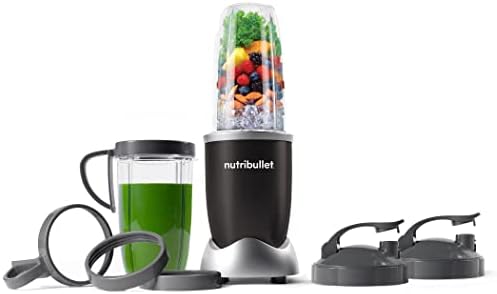 Visit on Amazon → Visit on Amazon →Nutribullet Personal Blender |
Personal blender | 24 oz cup, 600 watts | One smoothie a day, frozen fruit and ice | Visit on Amazon → |
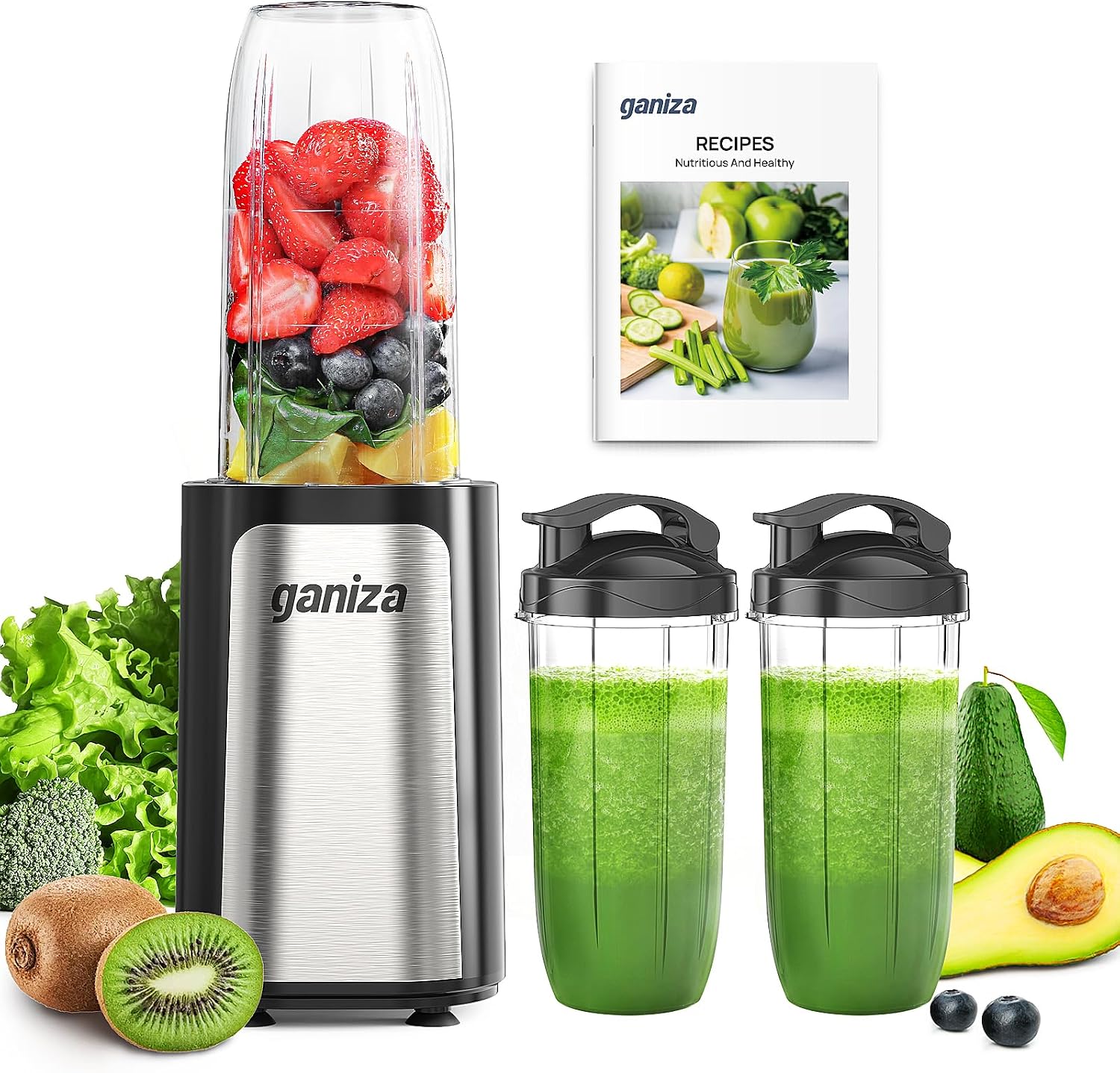 Visit on Amazon → Visit on Amazon →Ganiza Smoothie Blender |
Personal blender kit | 14-piece set with cups and lids | Soft ingredients, travel cups, tight budgets | Visit on Amazon → |
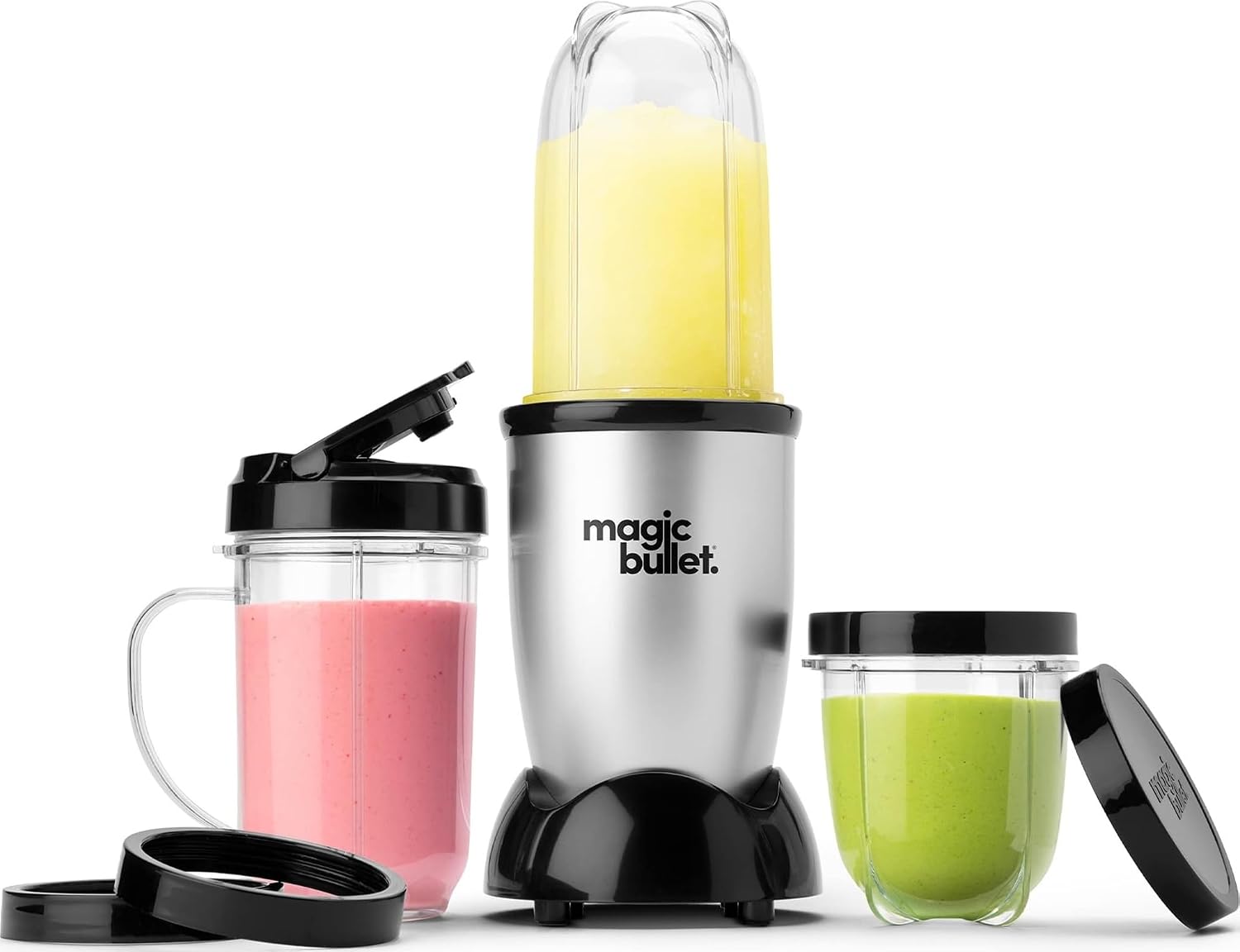 Visit on Amazon → Visit on Amazon →magic bullet Personal Blender |
Personal blender | 22 oz cup, 250 watts | Classic on-the-go shakes, small kitchens | Visit on Amazon → |
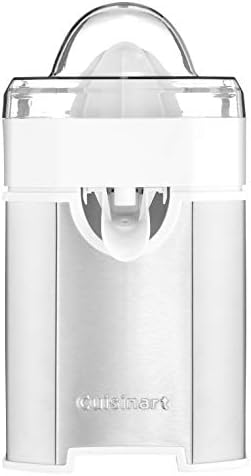 Visit on Amazon → Visit on Amazon →Cuisinart Pulp Control Citrus Juicer |
Citrus juicer | 3 pulp settings, limes to grapefruits | One glass of citrus at breakfast | Visit on Amazon → |
The table is the short version. The long version is that two of these machines are built for frozen fruit and two are built for something softer, and buying the wrong one is how people end up disappointed by a perfectly good appliance.
Should you buy the Nutribullet Personal Blender?
Yes, if you blend one smoothie a day and you want frozen fruit to actually break down. 600 watts in a 24-ounce cup is the right amount of power for one person, and the cup is the glass, which means less washing and less counter space. The caveats are the usual ones for this category: it is loud, and the cup connection is the part that wears. Run it at full power, check the seat, and do not overtighten.
Should you buy the Ganiza Smoothie Blender?
If you want a portable kit with cups and lids and your blending is mostly soft ingredients, it is a reasonable place to start. Go in knowing that budget blades dull faster, and if you blend frozen fruit every morning, spend the difference on watts instead of accessories. That is the trade, and it is an honest one.
Should you buy the magic bullet Personal Blender?
Yes, if you want the classic, compact, easy-to-clean personal blender for on-the-go shakes. No, if you have thin walls or a light sleeper in the house. The noise is real and the connection points wear over time. It is well worth the price for what it is, as long as you know what it is before you buy it.
Should you buy the Cuisinart Pulp Control Citrus Juicer?
Yes, if citrus is the job. Three pulp settings and a feed that handles limes through grapefruits covers a lot of breakfasts, and it takes up a fraction of the space a centrifugal machine demands. If you want greens, celery, and apple juice too, that is a different machine for a different counter.
Two machines, two jobs, and both of them fit in a small kitchen. That is the whole test.