Most small kitchens do not have a smoothie problem. They have a counter space problem, and it shows up the morning you have to dig the blender out from behind the sheet pans. Working out how to pick a personal blender and citrus juicer that both earn their inches is less about wattage bragging rights and more about what you actually drink before 9 a.m.
I run a six-stool smoothie stand called Pulp Cove in Portland, Oregon. Before that I was an ER nurse who blended two smoothies a day for fiber, one fruit and one vegetable, for years. I have made 40 smoothies before 9 a.m. on a Saturday. I have also watched a cheap motor quit inside a month, heard a personal blender carry through an apartment wall like a jet engine, and felt a cup wobble on its base because the connection points had worn out.
The short version: if frozen fruit and ice are your morning, buy the blender first. If your morning is one glass of orange juice, buy the juicer first. Then read the rest, because the difference between velvety and grainies comes down to decisions you make before you plug anything in.
Why you should trust me
I spent eight years blending twice a day before I ever sold a smoothie, and I have run the stand long enough to know what a Saturday rush does to a machine. Forty smoothies before 9 a.m. is not a review. It is a stress test.
The rules I hold myself to are simple. No blender gets recommended without a first-blend frozen fruit and ice test, and chunks fail it. No noise claim without a decibel reading at full power. No blade durability claim without 25 or more blends logged, because that is where blades dull and texture turns. No pitcher or cup claim without a full-batch run, because if a lid pops under load, the machine is out. No dishwasher-safe claim without checking every part myself, including the base.
That last rule matters more than people think. A blender you have to hand wash at 6 a.m. is a blender you stop using by week three.
How I picked and how I tested
This is a how-to about choosing and setting up, not a shootout, so here is the method behind the picks below.
Every machine gets the same first-blend test: frozen mango, a handful of ice, liquid to the fill line, one run. If I am chewing, it fails. Then it goes into the 25-blend log, because a personal blender can be perfect on blend one and chewy by blend 25. I run a decibel meter at full power, since "apartment friendly" is a marketing phrase until somebody measures it. I check whether a 60-second run heats the drink and how much foam gets whipped in, because aeration turns a protein shake into half air. And I check the connection points between cup and base, because those fail first on any personal blender.
For citrus the test is different. It is about how much force your hands have to supply, how much juice you get per fruit, and how many parts you have to wash. I have a bad grip from years of lifting patients, so I notice that more than most people do.
Two machines cover the two jobs in a small kitchen: frozen fruit and ice in the morning, citrus whenever you want it. Everything else is countertop real estate you are paying rent on.
The two machines that earn their counter space
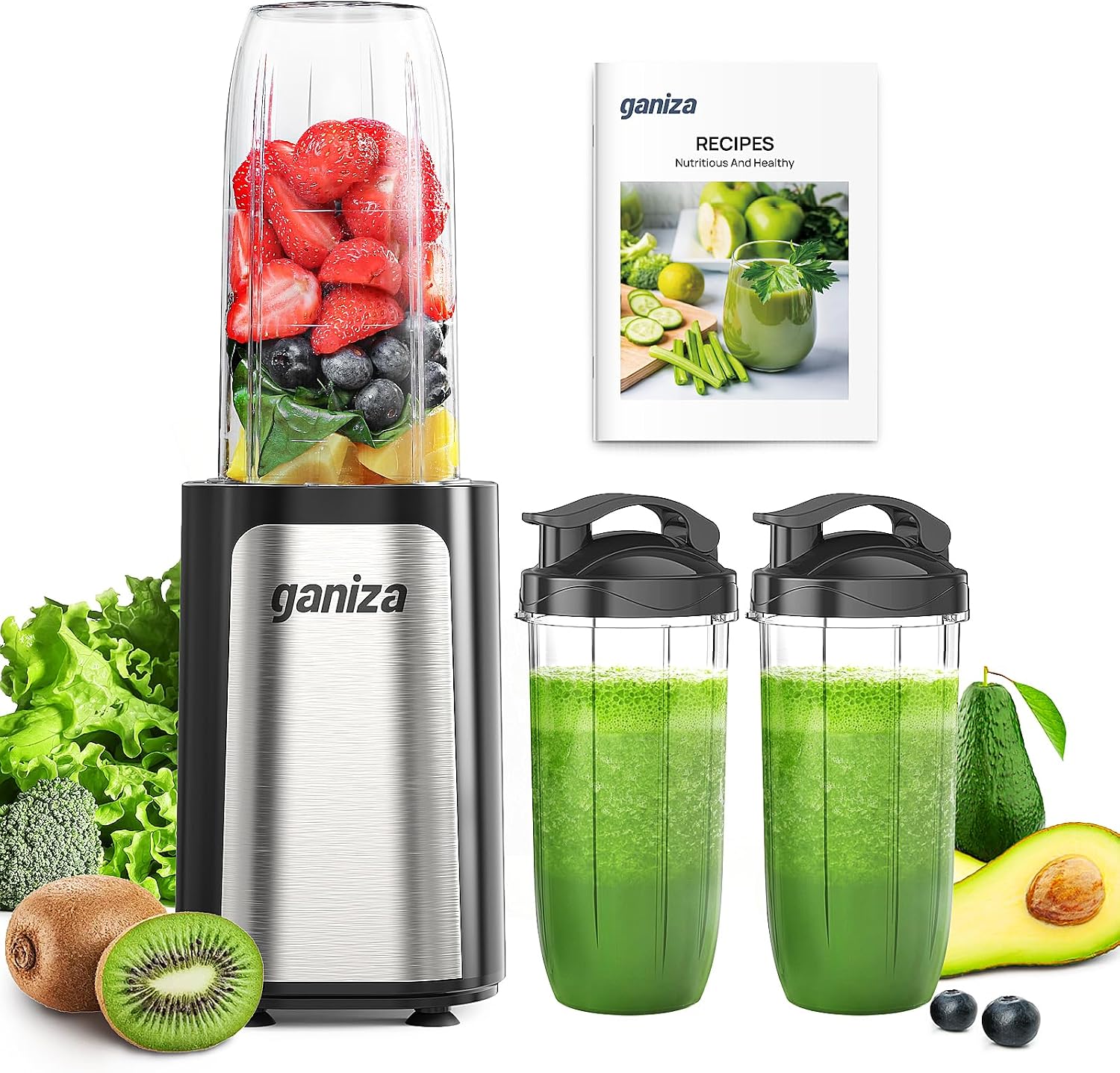
The daily driver: Ganiza Smoothie Blender, 14Pcs Portable Personal Blender Shakes & Smoothies
 Visit on Amazon →
This is the shape of blender that makes sense for one person in a small kitchen. It is a personal blender, which means single-serve cups instead of a 72 oz pitcher you have to fill, clean, and store. A 72 oz pitcher is a curse for a single person. You either make too much and freeze the leftovers, or you waste fruit. The cup you blend in is the cup you drink from, and that alone is why this class of machine stays out instead of going into a cabinet.
The 14-piece kit matters more than the spec sheet suggests, because the extras are what keep you from improvising. Spare cups mean you can blend a second shake while the first one chills, and lids mean breakfast can leave the house with you.
What to test before you trust it with your mornings. Run one frozen fruit and ice blend and listen. Every personal blender is loud, and no amount of marketing changes that, so the honest question is whether you would run it at 6 a.m. in your building. Then watch the cup-to-base connection points over the first few weeks. That is where personal blenders wear, and a wobbling cup is the first sign.
Flaws but not dealbreakers: Personal blenders whip air into a drink, so a protein shake comes out foamy if you run it long. Blend shorter than you think you need to, and keep the cup below the fill line, because overloading is how lids pop.
For one person, a couple, or anyone making a single serving at a time, this is the machine that fits the routine.
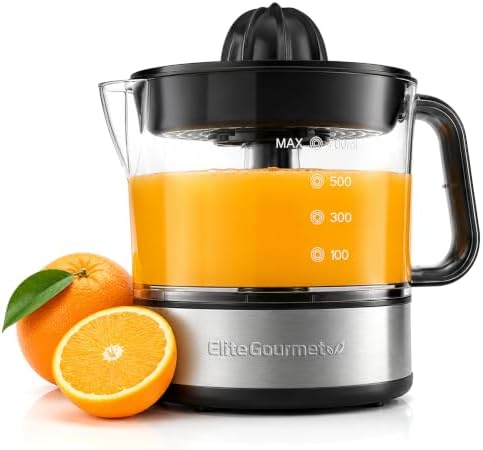
The breakfast juicer: Elite Gourmet ETS623 Electric Citrus Juicer, 24 oz, Black/Stainless Steel
 Visit on Amazon →
A 24 oz electric citrus juicer is a single-purpose machine, and single-purpose machines have to justify their footprint. This one does, for a specific person: someone who drinks orange or grapefruit juice several mornings a week and does not want to supply the pressing force by hand. A reamer-style electric juicer does the work for you, which sounds like a small thing until your hands ache or you are juicing for two.
The 24 oz capacity is the right size for a small kitchen. You are not buying a gallon of juice, you are buying two or three glasses. The black and stainless finish wipes down, and there is no big centrifugal basket with a dozen parts to scrub.
The limits are real and worth saying out loud. This is a citrus machine. It will not juice kale, celery, or ginger, so if your plan is green juice, this is not that purchase. And if you drink exactly one glass a day, a simple manual reamer costs less and takes up less room. The electric version earns its place when you juice often, when you juice for two, or when your grip needs the help.
Flaws but not dealbreakers: Citrus juicers leave pulp and sticky counters, so budget 30 seconds for cleanup, not zero. Rinse the cone and pitcher right away and it stays a 30-second job. Let it dry and it becomes a ten-minute one.
For anyone who wants fresh juice at breakfast without hauling out a machine the size of a toaster oven, this is the reasonable middle.
The setup workflow, step by step
Step one: Decide the drink before the machine. Write down what you actually drank last week. Frozen fruit and ice means blender first. Citrus means juicer first. Buying both at once is how you end up with one machine that never leaves the cabinet.
Step two: Measure the real estate. Measure counter depth and the clearance under your upper cabinets. A machine that fits but cannot be lifted out is not a machine you own. This is also the moment to decide whether it lives out or in a cabinet, because if the answer is cabinet, you will use it twice.
Step three: Load the cup in the right order. Liquid first, then soft fruit, then frozen fruit, then ice on top. Liquid at the bottom keeps the blades from cavitating, and putting the hard stuff last lets gravity feed it down as the top layer breaks up. This one habit does more for texture than any wattage number.
Step four: Tamp down instead of overloading. If the blend stalls, stop and push the ingredients toward the blades with a tamper or a spoon, with the machine off. Overloading the cup and shaking it is how lids pop and smoothies end up on the ceiling. I have cleaned that up in a stand kitchen, and it is never worth the shortcut.
Step five: Blend in short bursts. Pulse for a few seconds, let it settle, pulse again. Long continuous runs heat the drink and whip in air, which is exactly how a protein shake turns into foam. The goal is velvety, not aerated.
Step six: Juice citrus the fast way. Roll the fruit on the counter with your palm to break up the membranes, cut it across the equator, and press. Roll first and you get noticeably more out of each fruit. Drink it the same day, because fresh juice separates and dulls fast in the fridge.
Step seven: Clean before you sit down. Rinse the cup, lid, and blade assembly the moment you finish, then check which parts actually go in the dishwasher before you trust the claim. On the juicer, rinse the cone and pitcher before the pulp dries. Cleaning a machine while it is still wet takes seconds. Cleaning it the next morning takes a scrub brush and your patience.
What I would skip
Skip the giant pitcher if you live alone. A 72 oz blender is a wonderful machine for a family and a storage problem for everyone else, and extra capacity does not make a smoothie smoother.
Skip cold-press juicing if you juice twice a month. Cold press is slower and quieter and squeezes more out of greens, and if you juice daily it wins. If you juice occasionally, you paid for a machine that sits.
Skip anything marketed as apartment friendly until you have heard it. Noise is a feature you pay for, and the only number that counts is whether it wakes the person in the next room.
Skip any personal blender whose cup already wobbles on the base out of the box. Worn connection points do not get better.
What this actually costs
Prices move, so I am not going to quote one. Check current Amazon price on the pages above and do the only math that matters: the price divided by how many velvety smoothies you get before the machine turns them into grainies.
A blender that costs almost nothing and dies inside a month is the most expensive blender you can buy, because you pay again. The 25-blend mark is the number that separates the two outcomes, and it is why blade and motor quality matter more than the wattage printed on the box. The same logic applies to the juicer: divide the price by the number of mornings you will actually press fruit. If that number is five a week, the machine pays for itself in a season. If it is one a month, buy a manual reamer and keep your counter.
The two machines here cover two jobs for the footprint of one appliance. Set them up once, learn the load order, clean them while they are wet, and you will stop thinking about your equipment and start thinking about breakfast.
That is the whole job. Frozen fruit in, velvety out, every single morning.