Related: Blender Blade Durability: What Actually Happens After 25 Blends
I run a six-stool smoothie stand in Portland, Oregon, which means I have blended frozen fruit and ice before sunrise almost every day for years. So when a friend asks me to put together a smoothie blender setup for their kitchen, I do not start with wattage or program count. I start with blend 25.
Blend 25 is where the truth shows up. Every blade dulls. The only question that matters is whether it happens after 25 blends or after five years, and that number is what separates a machine that earns its counter space from one that ends up at a garage sale. I learned it the hard way with a mid-range Ninja that crushed ice beautifully until the smoothies started coming out chewy. I call those grainies. Nobody warns you, and most reviews never mention it, because reviewers blend once and move on.
So what follows is not a ranking of the most powerful machines. It is a three-piece kit: a full-size kitchen system for batch blending, a compact portable blender for single servings, and a replacement jar that keeps a perfectly good base out of the landfill. Three pieces, three jobs, and one test that decides whether any of them stays.
The Batch Machine: Ninja Professional Plus Kitchen System
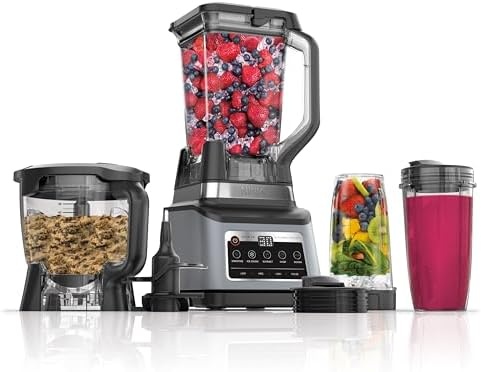
This is the piece that does the heavy lifting on a Sunday. The Ninja Professional Plus Kitchen System is a 1400-watt machine with Auto-iQ programs, and the Kitchen System label matters more to me than the wattage number. In the Ninja line, that label signals a base meant to cover more than one job rather than a single pitcher, which is exactly what you want if you are not willing to give up a foot of counter to two appliances. Auto-iQ takes the timing decision away from you, and that sounds like a gimmick until it is 6 a.m. and you are standing there holding a cup of frozen mango.
Here is my honest history with Ninja. My old BL610 crushed ice better than anything near its price and I recommended it for years. Then, somewhere around blend 25, the smoothies started turning chewy. That is not a knock on the brand, it is the nature of sharpened blades. The question I bring to the Professional Plus is whether a 1400-watt kitchen system holds its edge longer than a single-purpose pitcher did. That is the test, and I would rather tell you what to watch than pretend I have the answer for every kitchen.
What I can tell you is what to check on any full-size machine before it earns a permanent outlet. Run a full batch, not a polite half batch. If the lid pops when the pitcher is loaded the way you actually load it, the machine is out, because a lid that fails at capacity will fail on a Tuesday morning when you are already late. Then check whether every part comes apart for washing, gasket and all. A pitcher you cannot fully disassemble gets sour fast, and sour is not a flavor you can blend away.
The Single-Serving Answer: Ganiza Portable Personal Blender
A 72 oz pitcher is a curse for one person. That is not an opinion I arrived at slowly. I made a full pitcher of green smoothie one Sunday, froze the leftovers, and ate the same drink for four days. A personal blender solves that by blending into the cup you drink from, which means one vessel to rinse instead of three parts and a spatula.
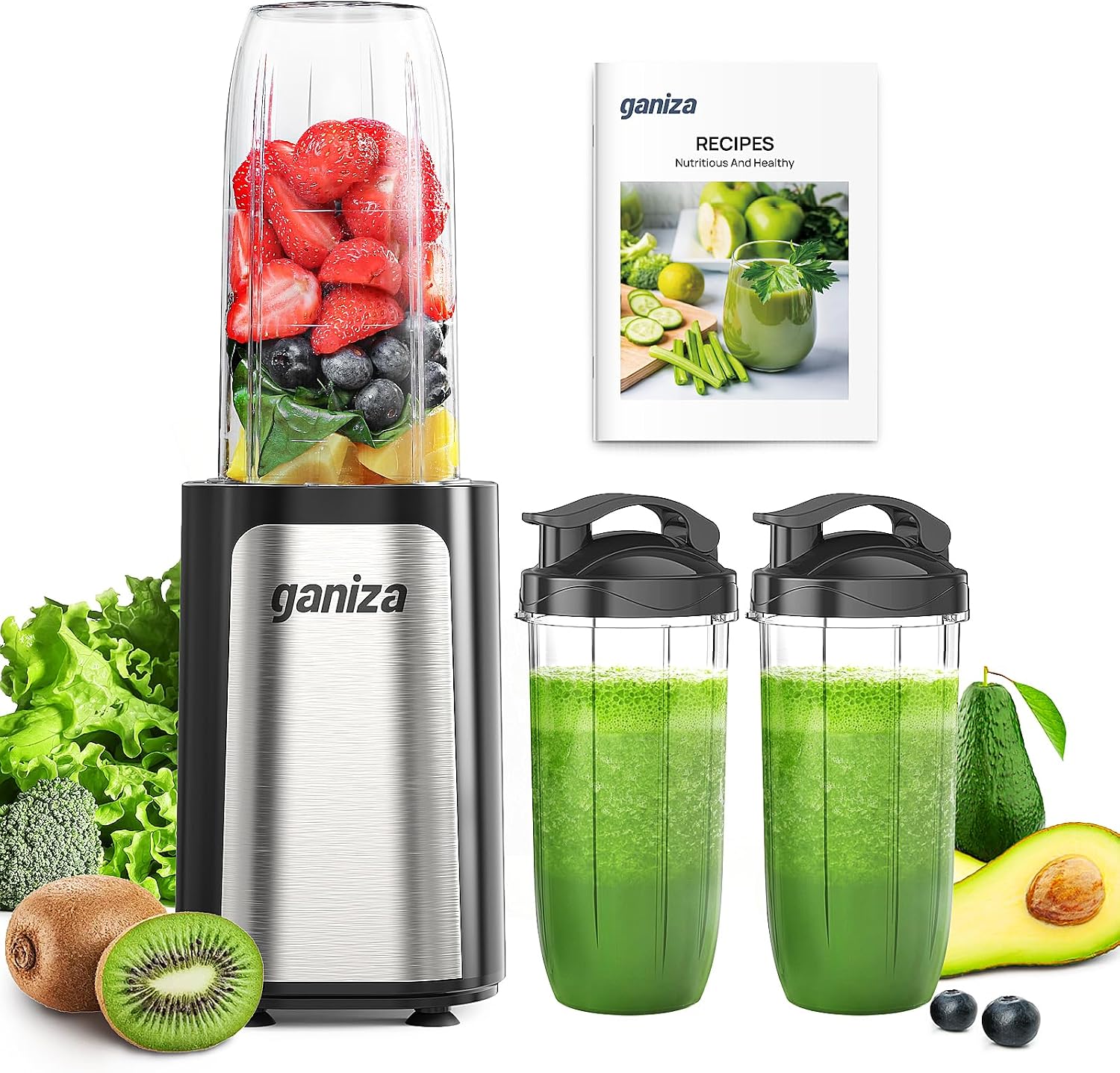
The Ganiza Smoothie Blender is a 14-piece portable personal blender built for shakes and smoothies, and the piece count is the part worth thinking about. When a set includes extra cups and lids, you are buying portion control as much as you are buying a motor. Portion your fruit the night before, freeze it, and the morning becomes a 30-second job.
Two things to test before you trust any personal blender with your mornings, and both come straight from my Magic Bullet years. Noise first. I ran that thing at full power and my neighbor knocked on my door to ask what the jet engine was. Apartment friendly means nothing until you have run a decibel meter at full power, and a personal blender is loud per ounce because the motor is small and working hard. Second, the connection points. On every personal blender I have owned, the place where the cup meets the base wears first, and once it wears, the cup wobbles and the blend turns inconsistent. Look at that interface before you buy, and look at it again after a month of daily use.
The Part Nobody Buys Until Their Jar Cracks: Replacement 5-Cup Square Jar
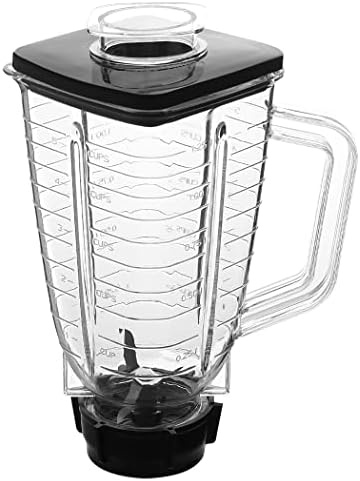
Blades dull and jars crack. The base, usually, is fine. That is the whole reason this replacement 5-cup square plastic jar with lid belongs in a setup article: it is compatible with Oster blenders, and it is the cheapest way to keep a machine you already own working instead of letting it sit on a shelf for a year because the original jar chipped.
The entire ballgame with a replacement part is fit. Compatible is a claim, not a guarantee, so check your base model and the jar size before you order, and confirm the lid seats the way the old one did. A jar that wobbles on the base will leak at the seal and you will blame the machine.
There is a second reason I like a square jar over a round one. Corners give a spatula somewhere to work. When you are portioning thick blends or scraping out the last of a nut butter smoothie, a square jar wastes less and cleans faster. Plastic is the right call here too, because a plastic jar is lighter and less likely to shatter on tile than glass. The tradeoff is scratches. Scratched plastic holds onto odors and stains over time, so rinse it promptly and give it a real wash rather than a quick swirl.
How I tested
Every machine I write about goes through the same gauntlet, and the gauntlet does not care how pretty the box is.
Frozen fruit and ice on blend one. Chunks fail it, no exceptions, and no second chance on a different fruit. If the first blend is not velvety, the machine does not get recommended.
The 25-blend mark. This is where grainies show up. I log every batch at the stand and taste for texture, not just for flavor, because a smoothie can taste right and still be chewy. A machine that is smooth at blend one and gritty at blend 25 is not a good blender, it is a good blender with an expiration date.
Noise at full power, measured with a decibel meter rather than described in adjectives. A noise claim without a reading is marketing copy.
A full-batch run, loaded the way a real person loads a pitcher, to see whether the lid holds.
A full teardown before I call anything dishwasher safe, gasket included. If I cannot get the parts apart, I do not trust a dishwasher to get them clean.
What the log says about a three-piece setup
Two machines beat one compromise. That is the conclusion I keep landing on after years of standing in a small kitchen. A full-size kitchen system with 1400 watts and Auto-iQ handles Sunday batches and frozen fruit for the week. A 14-piece portable personal blender handles the Tuesday morning single serving in the cup you are going to drink from. Trying to make one machine do both jobs is how people end up with a giant pitcher they resent and a personal blender they overload.
Countertop real estate is the quiet variable in all of this. A 72 oz pitcher is a curse for a single person and a gift for a family of four, and no spec sheet will tell you which one you are. Measure your counter before you measure a motor.
Aeration is the other thing specs miss. Blending whips air into a drink, and some machines are foamier than you would expect. If your protein shakes keep coming out half air, that is not your protein powder, that is your blender. Shorter runs and less headspace in the cup fix most of it.
And then there is the economics that nobody puts on the box. Value is not the sticker price. It is the price divided by how many velvety smoothies you get before the texture turns. That is why a replacement jar makes the list at all. Replacing one cracked part buys you another year or two of blends on a base that still works, and that math beats a new machine almost every time.
Blender setup reference table
This is the table I keep for my own kitchen. Three rows, three jobs, and the last column is the one that actually decides it.
| Pick | Job it does | Price | Check before you buy |
|---|---|---|---|
 Visit on Amazon → Ninja Professional Plus Kitchen System |
Batch blending, frozen fruit, full pitchers | $219.99 | Lid behavior at full capacity, and whether every part comes apart for washing |
 Visit on Amazon → Ganiza Portable Personal Blender |
Single servings, shakes, portion prep | $29.99 | Noise at full power, and the cup-to-base connection after a month |
 Visit on Amazon → Replacement 5-Cup Square Jar With Lid |
Reviving an Oster base whose jar cracked | Check current Amazon price | Your base model and jar size, plus whether the lid seals like the original |
Should you buy the Ninja Professional Plus Kitchen System?
Yes, if you blend for more than one person. It is a 1400-watt machine with Auto-iQ programs, and the Kitchen System label points at a base built to cover more than one job rather than a single pitcher. That is the argument for it in a small kitchen, where one footprint has to do the work of two.
Run a full pitcher before you commit, and watch the lid at capacity. My only real caution is the caution I give about every Ninja: blades dull. Log your blends, pay attention around the 25-blend mark, and you will know exactly when your smoothies start turning to grainies instead of being surprised by it on a rushed morning.
Should you buy the Ganiza portable personal blender?
Yes, if you are blending for one. A 14-piece set means extra cups and lids, so you can portion fruit the night before, blend in the cup you drink from, and skip the mid-morning washing entirely. For a single person in a small kitchen, that is the difference between a routine and a chore.
Test two things first. How loud it runs at full power, because personal blenders are the jet engines of the appliance world. And how the cup seats on the base, because that connection is the first thing to wear on every personal blender I have owned. Check it on day one and check it again in a month.
Should you buy the Oster-compatible replacement jar?
Yes, if your base still runs and only the jar failed. A 5-cup square plastic jar with a lid is the least glamorous purchase in this article and probably the smartest one, because it keeps a working machine working instead of sending you shopping for a whole new blender.
Check your base model and the jar size before ordering. Fit is the entire point of a replacement part, and a jar that does not seat properly will leak at the seal and make you think the motor is the problem. Rinse it promptly, wash it properly, and it will outlast whatever cracked the original.