I have made 40 smoothies before 9 a.m. on a Saturday, and I have poured more than one of them down the drain. That is the honest reason I treat countertop blenders and juicers as work equipment instead of appliances. At a six-stool stand, a machine either turns frozen mango and ice into something velvety, or it hands a customer a cup of chewy, and the person standing at the counter knows the difference in one sip. This comparison puts four machines that fight for the same 12 inches of counter side by side: the Oster Pro 1200, the nutribullet Pro+, a Turelar 400W immersion blender, and a cold press juicer.
Related: Blade Durability and the 25-Blend Mark
The short answer for most kitchens in 2026: if you blend for one or two people and want 1200 watts without a full pitcher, the nutribullet Pro+ is the one I would start with. If you blend for a household and want a glass jar plus a to-go cup in the same box, the Oster Pro 1200 is the better fit. The immersion blender and the cold press juicer are not smaller versions of those two. They are different jobs, and buying one when you needed the other is how a machine ends up in a cabinet.
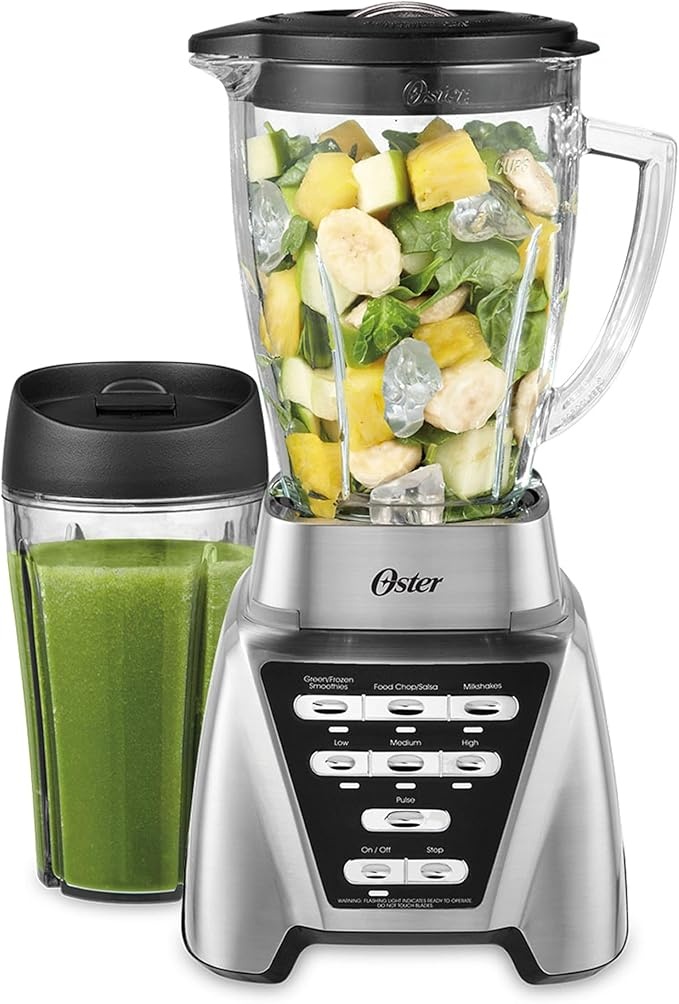
Oster Pro 1200 Smoothie Blender with Glass Jar & 24oz To-Go Cup
A full-size countertop blender with 1200 watts, seven speeds, a glass jar, and a 24 oz to-go cup in the box
Glass is heavy, and a full pitcher is a lot of machine for a single person
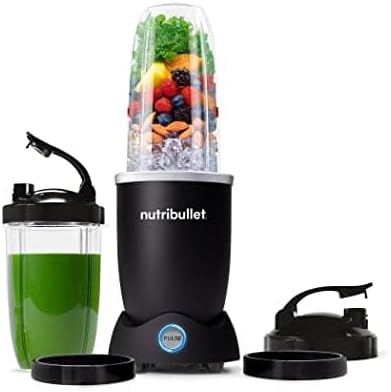
nutribullet Pro+ Personal Blender 1200W
1200 watts in a personal format, with pulse, auto shut-off, and both a 32 oz and a 24 oz to-go cup
Personal blenders live or die on the connection points between cup and base
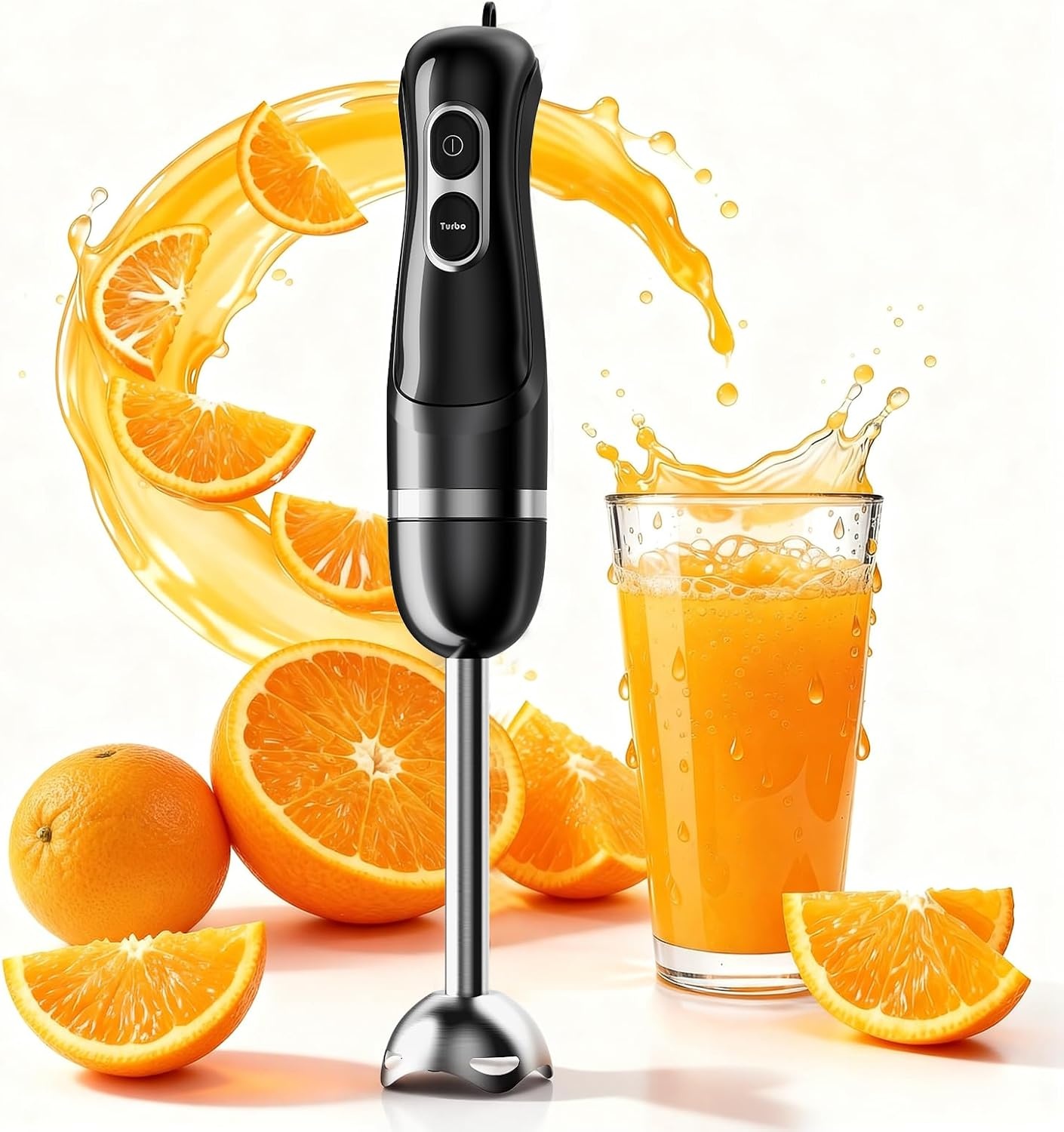
Turelar Immersion Blender Corded 400W
400 watts in a stick that stores in a drawer, two speeds, BPA-free, and no pitcher to wash
400 watts is not a frozen-fruit-and-ice machine, and it never will be
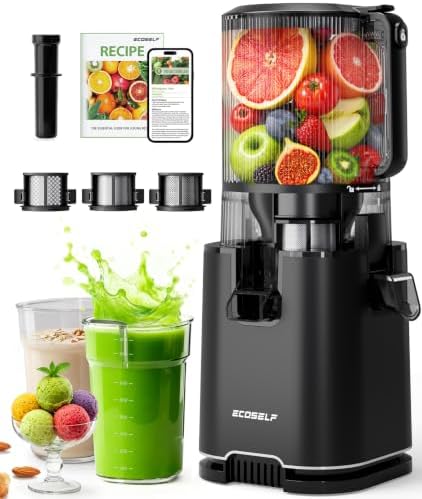
Cold Press Juicer Machines
Slow pressing is the only method that gets real yield out of greens
It does one job, it does it slowly, and it will never make a smoothie
Prices and availability were captured from Amazon Creators API and may change.
How a machine earns counter space
Six questions, every time, whether it is a $30 impulse buy or a machine that costs as much as a week of stand payroll.
- Does it crush frozen fruit and ice with no chunks on the first blend?
- Will it still be smooth at blend 25, or does it turn to grainies?
- How loud is it at full power, and would the neighbors complain?
- Does a 60-second run heat the drink up?
- Can it handle a full batch without popping the lid?
- Are all the parts dishwasher safe, and can I actually take them apart?
Notice that wattage is not on that list. Wattage is a marketing number that correlates with capability and tells you nothing about whether a blade assembly will hold an edge, whether a lid seal will survive a full pitcher, or whether your 6 a.m. blend wakes the whole building. I keep a decibel meter on the stand for exactly this reason. I do not trust a product page to tell me how a 1200-watt motor sounds in a studio apartment, because a spec sheet has never once had to live with a neighbor.
Oster Pro 1200: the full-size option
Oster Pro 1200 Smoothie Blender with Glass Jar & 24oz To-Go Cup is the traditional countertop shape. Seven speeds plus a 1200-watt motor, a glass jar instead of plastic, and a 24 oz to-go cup included so you are not forced to drink a family-size batch out of the pitcher.
The glass jar is the part I keep coming back to. Glass does not scratch, does not haze, does not hold onto the smell of last week's kale-and-garlic experiment, and it feels like a real kitchen tool instead of a plastic tub. The cost is weight. You will notice it when you lift a full jar onto the base and again when you wash it. If you have wrist issues or a shallow sink, that matters more than any speed setting.
Seven speeds is more useful than it sounds, because the difference between a frozen banana and a soft berry is real, and manual control lets you start slow, tamp down, and then blitz. That is how you keep a full pitcher from popping its lid. What a full-size pitcher will not do is fix portion control. A 1200-watt machine with a big jar encourages big batches, and big batches of smoothie do not improve with three days in the fridge.
nutribullet Pro+: 1200 watts in a cup
The nutribullet Pro+ Personal Blender 1200W takes the opposite approach: the same 1200-watt class of motor, but the container is your cup. Pulse function, auto shut-off, and two cups in the box, a 32 oz and a 24 oz, both of which double as to-go vessels. Matte black, which hides the fingerprints better than anything glossy.
The personal format solves the two problems that kill full-size blenders in small kitchens. First, there is no pitcher to wash, because the thing you blended in is the thing you drink from. Second, there is no batch temptation. You make one serving, you drink one serving.
What you give up is batch capacity and, potentially, longevity at the connection points. A personal blender works by locking a cup onto a spinning base, and every one of those interfaces I have owned has worn over time until the cup wobbles. That is the failure point to watch, and it is why I would rather spend on the version with more motor than on the version with more accessories. The other thing to know is that this format is not apartment friendly by default. A high-power personal blender at full speed is loud, and the walls do not stop it. Test the noise before you trust it with your mornings.
Turelar 400W immersion blender: the drawer machine
The Turelar Immersion Blender Corded 400W is the only machine here that does not need counter space at all. Two speeds, BPA-free, corded so it never dies mid-pot, and it costs less than a single blender pitcher replacement in some cases.
Where it wins: soup. You blend in the pot, on the stove, and you never pour hot liquid into a plastic jar. Same story for sauces, salad dressings, and an emulsifier job like mayonnaise or a vinaigrette that keeps breaking. It is also the machine I would hand someone recovering from surgery who needs a protein shake in 30 seconds and does not want to assemble anything.
Where it loses: frozen fruit and ice. A 400-watt stick is not a smoothie machine, and pretending otherwise is how people end up disappointed. It will handle a soft smoothie in a tall cup, especially if you keep the blade fully submerged and move it slowly, but the second you drop in a cup of frozen mango you are asking a hand tool to do a countertop blender's job. Splatter is the other learning curve. Keep the head under the surface, tilt the pot, and start on the low speed.
Cold Press Juicer Machines: a different job entirely
A cold press juicer is not a blender with a different label. A blender pulverizes everything and hands you the fiber along with the liquid. A cold press juicer separates the two slowly, at low speed, with pressure instead of blades. That slow crush is why cold press gets noticeably more out of greens than a centrifugal machine that spins them against a shredding disc and throws the pulp out before it has given up everything it has.
The trade-offs are honest ones. It is slower. It is one job, so it will not make a smoothie, a soup, or a salsa. It has more parts to disassemble and clean, and if the manual is thin on disassembly instructions, you will be figuring it out yourself, which is a pet peeve I have nursed for years. On the plus side, low-speed pressing is quieter than a 1200-watt blender at full power, and the juice holds up better in the fridge.
Here is the test before you buy one: do you juice daily, and do you juice greens? If yes, cold press wins and the cleanup is the cost of doing business. If you want one glass of orange juice at breakfast, a simple reamer beats a whole machine, and countertop real estate is real estate.
The trade-offs, side by side
Match the machine to the routine, not the other way around.
- Batch blending for a household, or a glass jar you can trust: Oster Pro 1200. The seven speeds and the glass jar are worth the weight, and the included to-go cup covers the rushed morning.
- Single servings, small kitchens, protein shakes: nutribullet Pro+. One cup, one drink, one thing to wash. Watch the connection points and the noise.
- Soup, sauces, emulsifying, and the smallest possible footprint: Turelar 400W immersion blender. It lives in a drawer and earns its place every time you make soup.
- Daily greens and maximum yield: Cold Press Juicer Machines. Slow, quiet, one job, more parts.
The mistake I see most often is buying a full-size pitcher for one person, or buying a personal blender for a family of four, and then blaming the machine. The machine is fine. The routine was the mismatch.
Noise, aeration, and the 30-second rush
Two things that never appear on a spec sheet and always matter.
Aeration: some machines whip more air into a drink than others, and a protein shake that comes out half foam is a real problem for anyone on a liquid diet who needs calories, not bubbles. If foam is your enemy, blend shorter, use the pulse function, and let the cup sit for a minute before you drink it.
The 30-second rush: a high-power machine blended hard and fast will warm the drink slightly. That is physics, not a defect. On a rushed morning, a 30-second blitz beats a longer programmed cycle every time, and it is the reason I still reach for the fast machine even when the nicer one is sitting right there.
What I am testing next
The 25-blend log is running on both 1200-watt machines, one batch a day, tasting for grainies after each one, with decibel meter readings at full power and a hard look at the cup-to-base connection on the personal blender around blend 20. I will report what the numbers say, not what the marketing says.
If you want the machine that covers the most mornings for the most people, start with the Oster Pro 1200 for a household or the nutribullet Pro+ for one. If your mornings are soup and sauces, the immersion blender is the value pick. If they are greens by the glass, go cold press and accept the cleanup. Visit on Amazon → to check current pricing on the personal blender, or start with the full-size jar if you blend in batches.