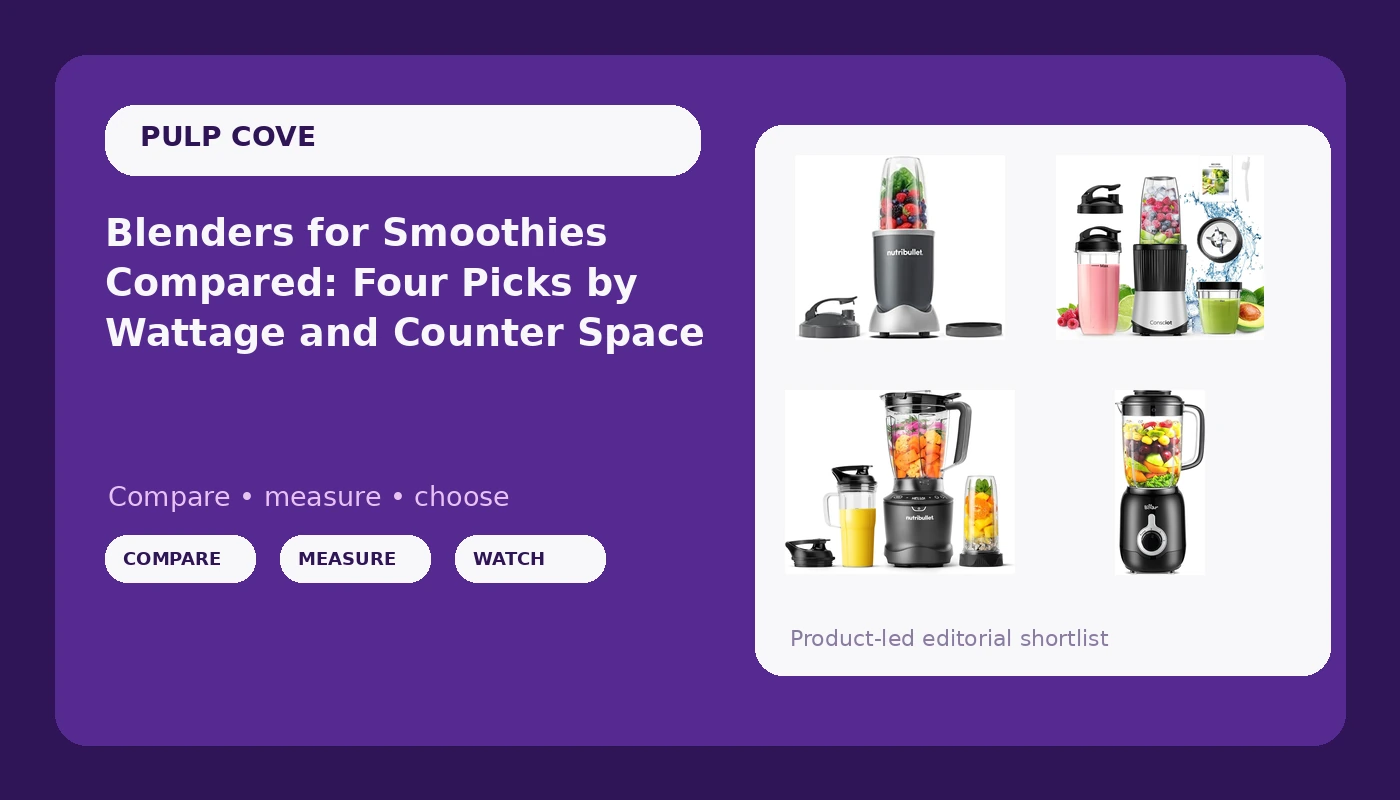
I have made more smoothies before 9 a.m. than most people make in a month. That is not a brag, it is a job description. Pulp Cove is a six-stool smoothie stand in Portland, and the four machines on this page are the ones customers ask about most: three personal blenders and one full combo unit. This comparison of blenders for smoothies is built the way my testing log is built, around a single question. Does it turn frozen fruit and ice into something velvety, and does it still do that at blend 25?
Related: Frozen Fruit and Ice: What Actually Kills a Blender Blade
The short answer: for one person blending one or two smoothies a day, the Nutribullet Personal Blender NBR-0601WM is the format that started this whole category, and the 24 oz cup is the reason. For a household or a Sunday batch, the nutribullet SmartSense Blender Combo and its 64 oz pitcher is the only machine here built for volume. The Consciot 11-Piece and the Bear Blender are the budget plays, and they earn their spots for different reasons.
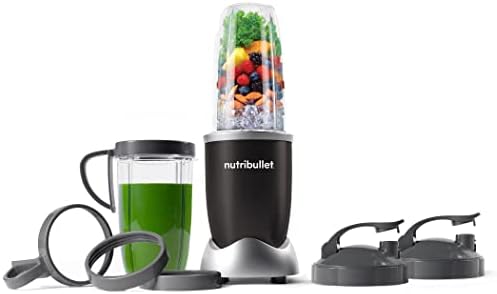
Nutribullet Personal Blender NBR-0601WM
600 watts in the 24 oz format that made personal blenders a category, built for shakes, smoothies, food prep, and frozen blending
One cup size and no pitcher, so it cannot batch; the base-to-cup connection is the wear point on this format
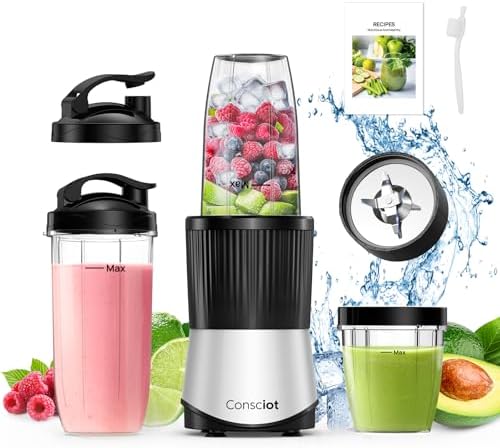
Consciot 11-Piece Blender
900 peak watts and 11 pieces that cover both personal cups and kitchen-size blending, which is a lot of kit for the money
Peak watts are not continuous watts, and 11 pieces means 11 things to lose, wash, and store
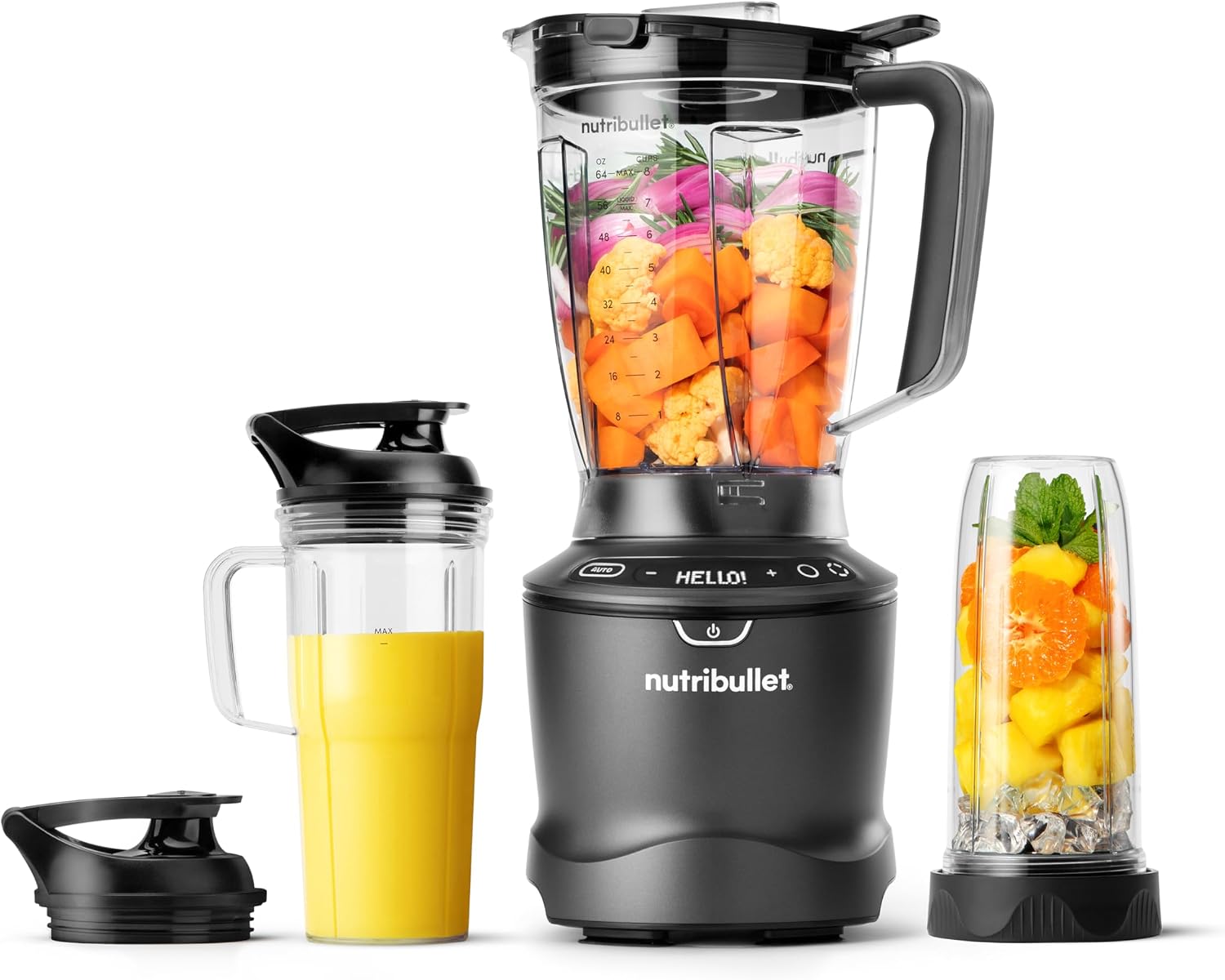
nutribullet SmartSense Blender Combo NBF50700
1400 watts, a 64 oz pitcher, 32 oz and 24 oz cups, and 5 speeds for smoothies, ice and frozen fruit, nut milk, and soup
The biggest footprint of the four, and a 64 oz pitcher is genuinely a curse for one person

Bear Blender 700W with 40 oz Cup
700 watts, a 40 oz cup, 3 speeds for crushing ice and pureeing frozen fruit, plus an autonomous clean cycle
The newest and least proven machine here; 40 oz is a lot of cup to fill for a single drink
Prices and availability were captured from Amazon Creators API and may change.
What I look for before a blender earns countertop real estate
Six checks, every time, and the order matters because the last one is the one that costs you money.
- Frozen fruit and ice on blend one, with no chunks left behind. If the first smoothie has grit in it, nothing later in the list can save it.
- Blend 25. This is the number nobody prints on a box. Blades dull, and the question is whether your smoothies stay velvety or start coming out chewy, which is what I call grainies. A machine that is smooth on day one and grainy on week three was never a good blender, it was a good first impression.
- Noise at full power, measured, not described. "Apartment friendly" is a marketing phrase until someone runs a decibel meter next to it. Personal blenders are the loudest category I have ever owned, and the walls do not stop it.
- Heat and aeration on a 60-second run. Long blends warm the drink and whip air into it. A protein shake that comes out half foam is a portion problem disguised as a blending problem.
- A full batch without the lid popping. Overload a pitcher and you will be wiping smoothie off the ceiling. This is a real failure mode, not a hypothetical.
- Every part dishwasher-safe and actually disassemblable, base included. I check this myself. A jar you cannot take apart is a jar that smells like old kale by month two.
Specs narrow the field. The 25-blend mark decides it. Everything below is organized around how each machine holds up against those six checks, based on what each one is built to do.
Nutribullet Personal Blender NBR-0601WM: the 600-watt benchmark
The Nutribullet Personal Blender is the 24 oz, 600 watt, dark gray machine that turned the personal blender into a category, and it is still the format everything else gets compared to. It is built for shakes, smoothies, food prep, and frozen blending, and the design logic is the good part: the cup is the glass. You blend, you twist the blade assembly off, you drink out of the same container. One thing to wash instead of three.
Where it wins is simplicity and size. At 24 oz and 600 watts, it fits the actual routine of one person making one drink in the morning. It does not need a pitcher, does not need a tamper, and does not ask you to plan ahead. If your goal is a green smoothie with fiber still in it and a protein shake in under a minute, this is the shape of machine that does it.
Where it loses is anything beyond that. There is no pitcher here, so batch prep is off the table. You are making one drink at a time, every time. And the known wear point on this whole format is the connection between the base and the cup. That interface takes the torque of every blend, and on personal blenders it is the part that gets loose and wobbly long before the motor gives up. Watch it, and do not slam the cup down onto the base.
Consciot 11-Piece Blender: the budget all-rounder
The Consciot is the kit play. 11 pieces, 900 peak watts, and a design that covers both kitchen-size blending and personal-size cups in one box. If you have ever stood in a store trying to decide between a countertop blender and a personal blender, this is the product that says you do not have to choose, and it does that for a very small amount of money.
The 11 pieces are the selling point and the catch at the same time. On the plus side, you get cups and a blending jar, which means one person can make a morning shake and a bigger batch of sauce or soup without buying a second machine. In a small kitchen where countertop real estate is the real budget, that flexibility is worth more than an extra 200 watts.
The catch is the number itself. Peak watts are not the same as continuous watts. A 900 peak watt rating tells you what the motor can hit briefly under load, not what it sustains through a full pitcher of frozen mango. It is a real number, it is just not the number you think it is. And 11 pieces means 11 lids, blades, gaskets, and cups to keep track of, wash, and store. If your cabinets are already full, count the pieces before you buy.
nutribullet SmartSense Blender Combo NBF50700: the batch machine
This is the only full-size machine in the group, and it is not close on capability. 1400 watts, a 64 oz pitcher, a 32 oz cup, a 24 oz cup, and 5 speeds, in gunmetal gray. It is rated for smoothies, ice and frozen fruit, nut milk, and soup, which is a wider job description than any other blender here. Five speeds plus a pitcher is what lets you go from a single shake to a batch of soup without changing machines.
For a household, this is the obvious pick. Sunday prep, four smoothies portioned into jars, a pitcher of nut milk, a blended soup in winter. The 64 oz pitcher is the reason it exists, and nothing else on this list can do that job. It is also the one machine here where the extra money buys capability rather than finish.
For one person, the pitcher is the problem. A 64 oz pitcher is a curse in a single-person kitchen, because you will either fill it and freeze the leftovers, or you will underfill it and wonder why the blades are not catching. I have done both. Small batches in a big pitcher are how you get aeration and chunks in the same drink. The 24 oz and 32 oz cups are there to solve exactly that, and you should plan on using them for daily blending and saving the pitcher for batch day.
The other honest trade-off is footprint. This is the largest machine of the four, and it will own a meaningful chunk of your counter. If you do not have that space, the cups do not help you.
Bear Blender: the 40-ounce newcomer
The Bear Blender is the 2025 entry: 700 watts, a 40 oz cup, and 3 speeds, listed for crushing ice, pureeing frozen fruit, and running an autonomous clean cycle. It sits between the personal blenders and the combo on capacity, which is a genuinely useful place to sit. A 40 oz cup makes a smoothie plus a refill, or two smaller drinks, without dragging out a pitcher.
The autonomous clean cycle is the feature that stands out on paper. Rinsing a blender jar by hand is the chore that makes people stop using blenders, so a self-clean cycle addresses a real problem. I want to see how it handles the corners and the blade assembly, because those are the two spots that never get clean on their own.
The reason it lands last on this list is not the specs, it is the track record. It is the newest machine of the four, and a personal blender's whole reputation rests on what happens after the first month, when the connection points start to loosen and the blades start to lose their edge. 700 watts and a 40 oz cup are the right ingredients. Whether it stays smooth at blend 25 is the unanswered question, and that is the only question that matters at this size.
The trade-offs, and who each one is actually for
Buy for the routine you have, not the one you aspire to.
If you make one smoothie a day and you want it in your hand fast, the Nutribullet Personal Blender NBR-0601WM is the cleanest fit. 600 watts, 24 oz, cup-as-glass, no pitcher to clean. The limit is that it will never make a batch, and the cup connection is the part that ages first.
If you want the most capability per dollar, the Consciot 11-Piece is the value argument. 900 peak watts and 11 pieces that cover both sizes is a lot of hardware for a budget slot. Just go in knowing peak wattage is a burst rating and that you are signing up to store 11 pieces.
If you are blending for more than one person, or you prep for the week, the nutribullet SmartSense Blender Combo NBF50700 is the only machine here that does the job properly. 1400 watts, a 64 oz pitcher, two cup sizes, 5 speeds. You pay for it in money and in counter space, and for a household both of those are fair trades.
If you want a big cup without a big pitcher and you are willing to be an early adopter, the Bear Blender is the interesting bet. 700 watts, 40 oz, 3 speeds, autonomous clean. It is the one I would want to check again in three months.
The machine that fits your counter and your actual morning is the right one. A 64 oz pitcher is a waste on a person who blends one drink, and a 24 oz cup is a bottleneck for a family of four. Match the container to the routine first, then argue about watts.
What the numbers say
Three numbers decide almost everything on this page: watts, cup or pitcher volume, and the count of pieces you have to wash.
Watts do not blend frozen fruit by themselves. 600 watts in a 24 oz cup is a much easier job than 900 peak watts in a full jar, because the load scales with what you put in the container. A lower wattage motor in a small cup can out-blend a higher rated motor that is straining against an overloaded pitcher. This is why I do not rank these four by wattage, and why the 1400 watt combo is the batch machine rather than the universal answer.
Volume is the number people underestimate. The 24 oz Nutribullet cup and the 32 oz and 24 oz cups on the SmartSense Combo are single-serving tools. The 40 oz Bear cup is a serving and a half. The 64 oz pitcher is four servings or more. Every complaint about a blender that "leaves chunks" usually traces back to a container that was too big for the amount inside it, which keeps the blades from pulling the fruit down into them.
Piece count is the number nobody advertises. An 11-piece set is a flexible system and a storage problem in the same box. A one-cup personal blender is a limited system and a five-second cleanup. Decide which of those two you can live with for a year, because that is the part you will actually notice.
What I'm watching next
Three things on the bench.
First, the Bear Blender and its 25-blend mark. 700 watts and a 40 oz cup is a promising combination, and the autonomous clean cycle is the feature I want to see hold up. New machines are always smooth in month one.
Second, the heat question on the 5-speed SmartSense Combo. Long programs and high speeds are what generate aeration and warmth, and a soup setting and a smoothie setting pull in opposite directions. I want to know whether a 60-second blend at the top speed warms the drink noticeably.
Third, the durability of the base-to-cup connection across all three personal-format machines. That is the part that fails first, it is the part no spec sheet mentions, and it is the difference between a blender you keep for five years and one you replace after 25 blends. Show me blend 26 and we can talk about how smooth it stays.